5 Beginner-Safe Edible Wild Mushrooms (and How to Be Sure)
A short list of mushrooms with no deadly lookalikes — the only kind beginners should ever pick.
WARNING: Mushroom misidentification kills more foragers every year than every other wild food combined. The list below is limited to species considered beginner-safe because they have no deadly lookalikes — but you should still verify every find with an experienced local forager or a mycological society before eating.
-
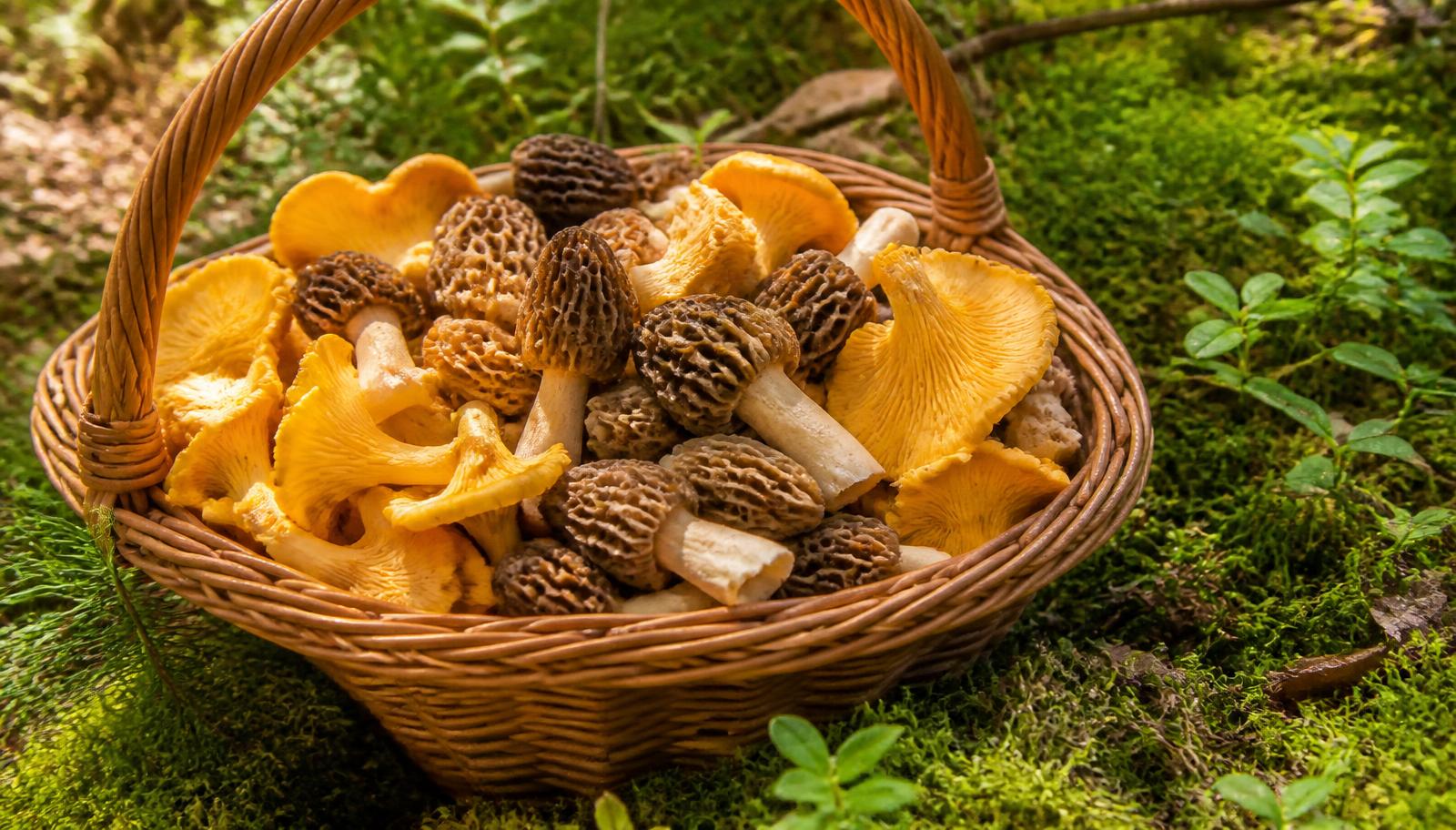
MORELS (Morchella spp.) — honeycomb cap, completely hollow when sliced top-to-bottom (this is the key test — the false morel is filled with cottony tissue). Spring only, often near dying elms, ash, and recent burns.
-
CHICKEN OF THE WOODS (Laetiporus sulphureus) — vivid orange-and-yellow shelf mushroom on oak, cherry, or other hardwoods. No gills, just tiny pores underneath. Avoid specimens growing on conifers or eucalyptus — they can cause GI upset.
-
CHANTERELLES (Cantharellus spp.) — golden, vase-shaped, with shallow forked 'false gills' that run down the stem (not true gills). Sweet apricot smell. The toxic Jack-O'-Lantern lookalike has true sharp gills and grows in clusters from buried wood — chanterelles grow solitary from soil.
-
PUFFBALLS (Calvatia gigantea, etc.) — only eat when pure white inside throughout. Slice every single one top-to-bottom: if you see ANY outline of a developing mushroom cap, gills, or stem inside, discard it — that's a deadly Amanita 'egg.'
-
LION'S MANE (Hericium erinaceus) — unmistakable white cascading 'icicles' growing from hardwood trunks. No toxic lookalikes in North America.
Foraging rules that keep you alive: (a) Use TWO independent identification sources for every species. (b) Take a spore print when in doubt. (c) Eat only a small amount of any new species the first time. (d) Never eat little brown mushrooms ('LBMs') — they include some of the deadliest species and are not worth the risk.