8 Wild Edible Berries Every North American Hiker Should Recognize
Trailside snacks that won't kill you — plus the lookalikes that will. Identification photos and dead-giveaway features for each.
CAUTION: Never eat any wild plant unless you are 100% sure of its identification. Cross-reference with a regional field guide and, ideally, an experienced local forager. The information below is educational, not a substitute for in-person training.
-
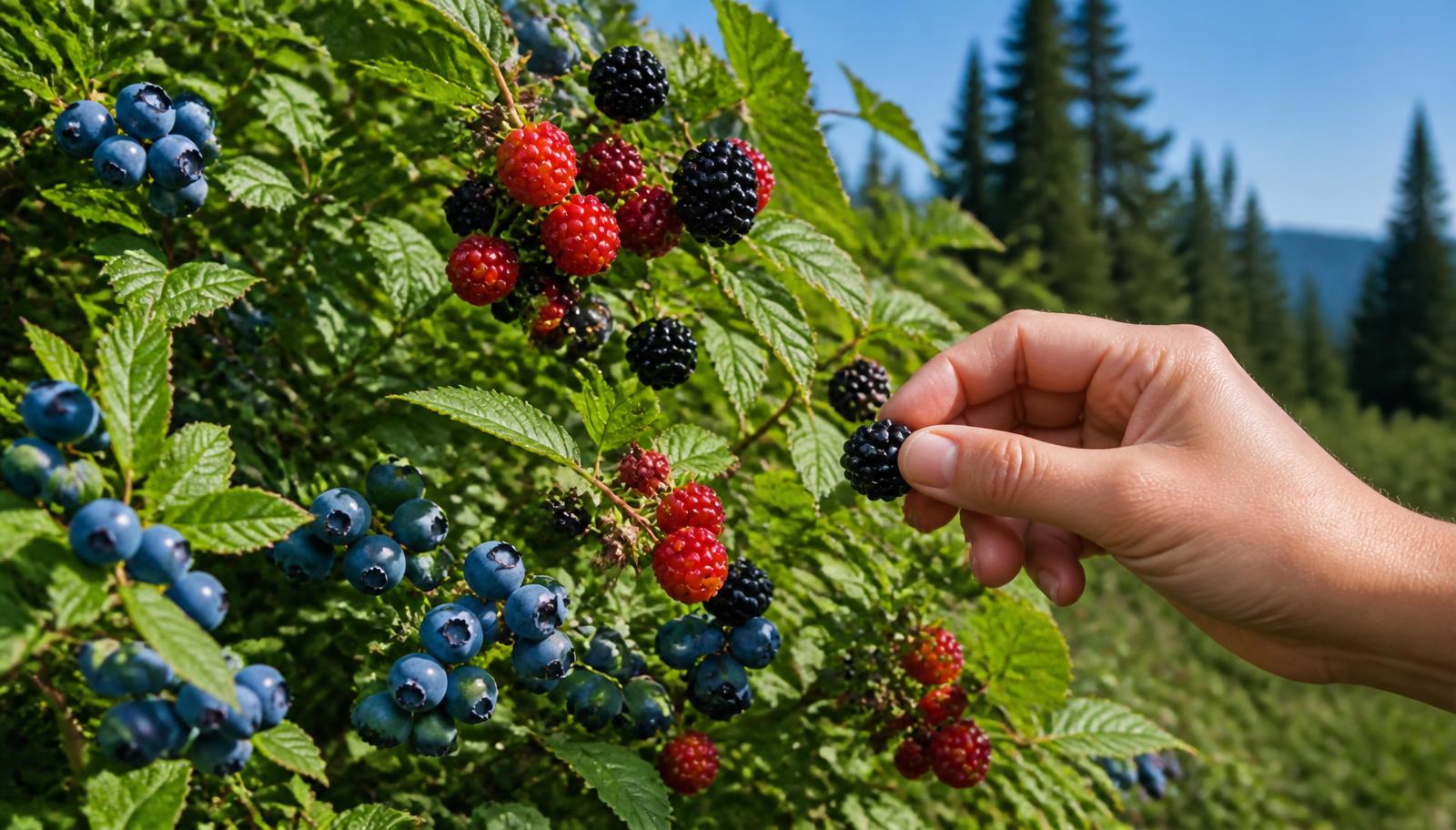
WILD BLUEBERRY (Vaccinium spp.) — the gold standard. Small (5–8mm) blue-black berries with a five-pointed crown on the bottom. Native across the northern U.S., Canada, and the Appalachians. Foolproof when you find them.
-
WILD RASPBERRY & BLACKBERRY (Rubus spp.) — thorny canes, compound leaves, and the iconic aggregate berry. Hollow-cored when picked = raspberry. Solid core = blackberry. Both safe.
-
THIMBLEBERRY (Rubus parviflorus) — Pacific Northwest favorite. Big maple-shaped leaves, no thorns, soft red berry shaped like a thimble. Mild and slightly tart.
-
SALMONBERRY (Rubus spectabilis) — also PNW. Orange-to-red, looks like a yellow raspberry. Bright pink flowers in spring. Edible, slightly bland.
-
SERVICEBERRY / SASKATOON (Amelanchier spp.) — small purple-blue berries that look like blueberries on trees rather than shrubs. Five-petaled white flowers in early spring. Excellent and widespread.
-
WILD STRAWBERRY (Fragaria virginiana) — unmistakable. Tiny but more intensely flavored than store-bought.
-
ELDERBERRY (Sambucus canadensis/cerulea) — clusters of small purple-black berries. MUST be cooked — raw berries cause stomach upset. Red elderberry (Sambucus racemosa) is more toxic and best avoided.
-
HUCKLEBERRY (Vaccinium spp.) — close cousin to blueberry, common in the Rockies and Pacific NW. Slightly tarter, often solitary on the stem rather than in clusters.
Universal rule: if you can't ID it confidently, leave it. A single bad ID can ruin a trip — or end it.