How to Cross a River Safely on the Trail
Drowning is one of the top causes of backcountry death. The right technique — and the right decision not to cross — can save your life.
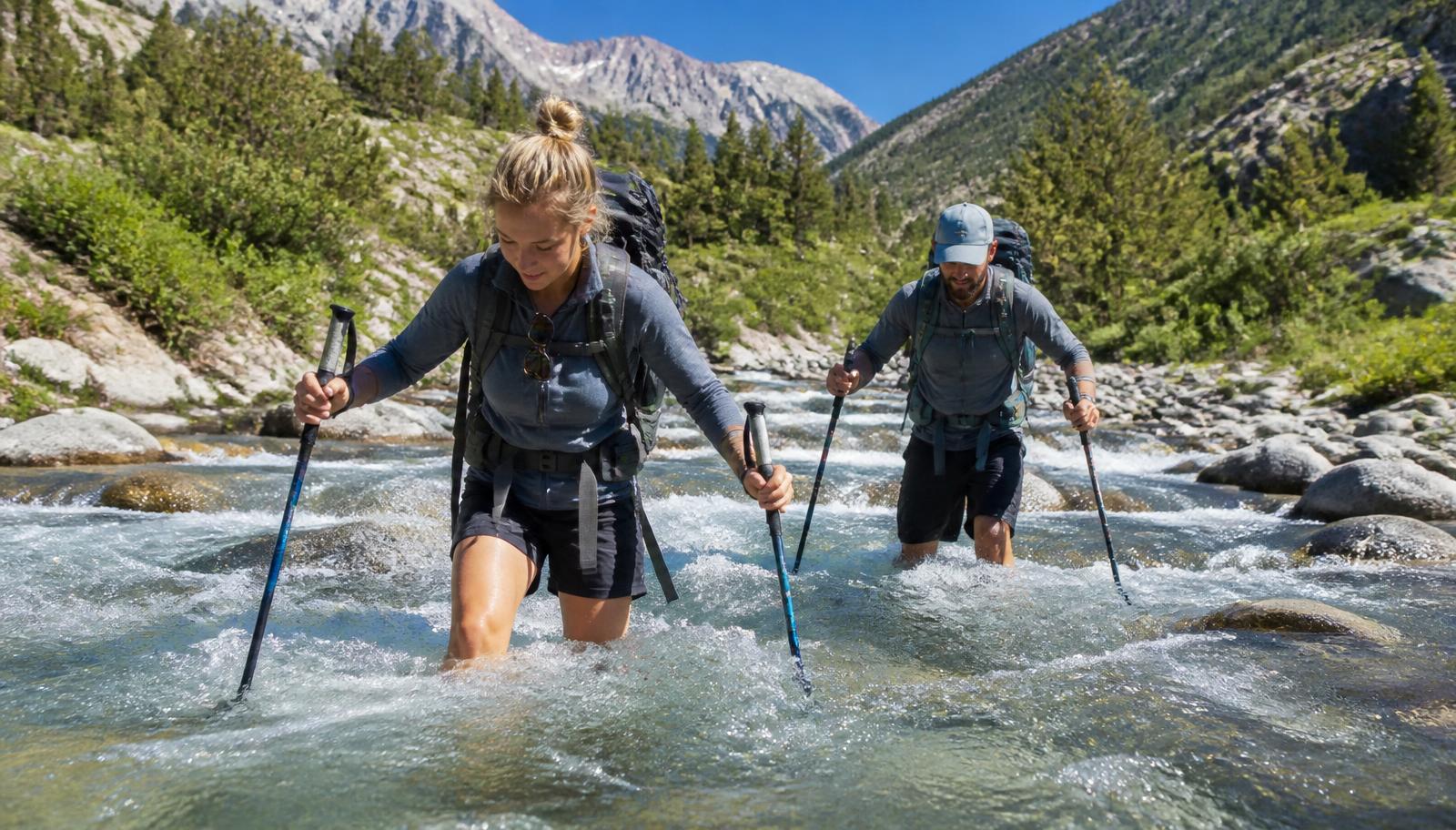
Most fatal river-crossing accidents happen because hikers underestimate current and overestimate their own ability. Knee-deep moving water at 6 mph can knock down a strong adult. Always assume the river is more dangerous than it looks.
Before you step in: scout 100 yards upstream and downstream for a wider, shallower, slower spot. Avoid bends (deeper on the outside, faster current). Avoid logjams and strainers — they will pin and drown you. Cross above, not below, hazards.
Cold morning water is slowest — plan crossings before snowmelt peaks in late afternoon. If the water is opaque with sediment, you can't see the bottom and the risk just multiplied.
Technique: face slightly upstream, side-step, keep two points of contact. Trekking poles are non-negotiable — plant them firmly upstream of your stance. Unbuckle your hip belt and sternum strap so you can shed the pack if you fall.
Group crossings: form a triangle or line abreast, strongest hiker upstream as a current break, link arms at the elbows. Move as one unit.
When to NOT cross: water above mid-thigh on the smallest member, current that knocks you off-balance during a test step, debris floating past at speed, or any cloudy fast water. Turn around or wait for morning. The trip can wait.