
Lightning Safety on the Trail: What to Do When the Sky Turns
More hikers die from lightning than from bears, snakes, and mountain lions combined. Here's the real protocol.
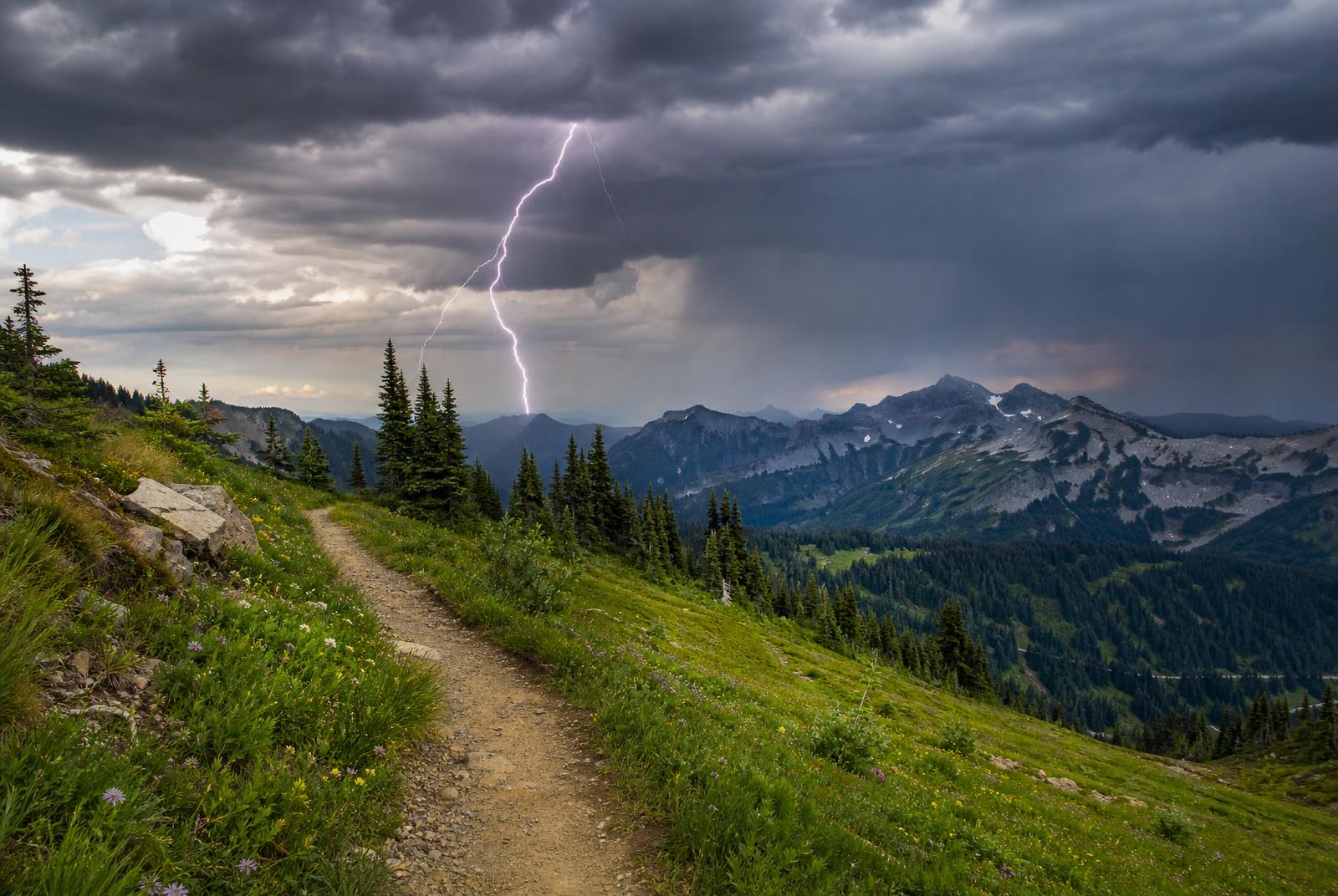
Lightning is the second-leading cause of weather-related death in the U.S. Hikers above treeline are uniquely exposed — and the storm doesn't have to be overhead. Strikes can travel 10+ miles from the parent cloud.
Plan: in summer, summit by 10 a.m. and be off exposed ridges by noon. Storms build through the afternoon as solar heating drives convection.
Recognize danger early: towering cumulus clouds, sudden temperature drop, hair standing on end, a buzzing or crackling sound, or a metallic taste in the air. Any of these = move now.
If caught: get off ridges, peaks, and open meadows. Move to lower elevation. Avoid lone trees, water, and metal (poles, fences). Spread your group out at least 20 feet apart so a single strike can't injure everyone.
The 'lightning position': crouch on the balls of your feet, heels touching, hands over ears, head tucked. Insulating layer (pack, sleeping pad) under your feet helps. Do NOT lie flat — ground current is the most common cause of strikes.
Wait 30 minutes after the last thunder before resuming the hike. Most strike victims are hit during the lull when people think the storm has passed.