Osprey Atmos vs Gregory Baltoro: Pack Showdown (2026)
Can't decide between the Osprey Atmos and Gregory Baltoro? Our 2026 field-test compares fit, carry, ventilation, and features to declare a winner.
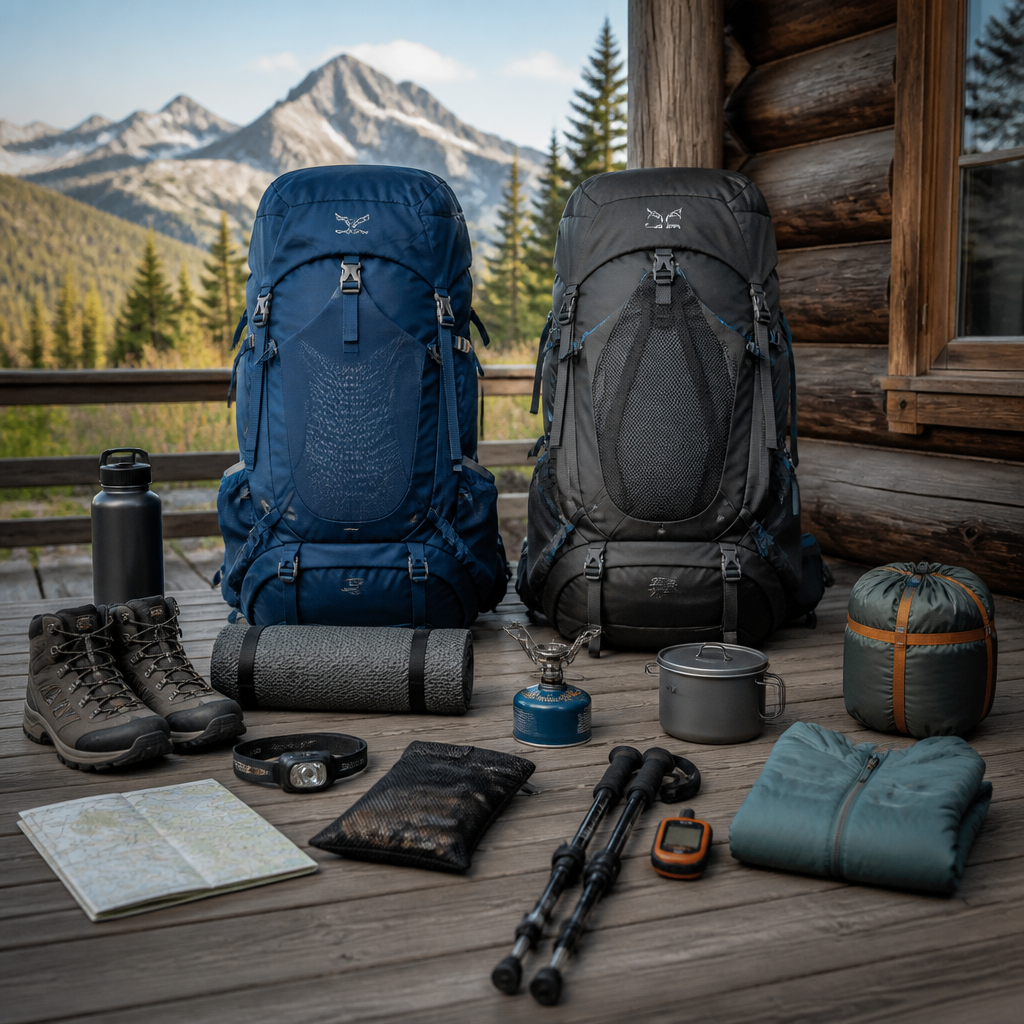
You're standing in the gear shop aisle, a 30-pound sandbag in your hand. You’ve just tried on the Osprey Atmos AG, and it felt like a zero-gravity hug. Now you’re looking at the Gregory Baltoro, the legendary workhorse of the trail. They’re the two undisputed titans of backpacking packs, the final boss battle before you can hit the checkout and get on with planning your trip. Which one is right for you?
Choosing between these two packs is a classic rite of passage for serious backpackers. Both represent the pinnacle of load-hauling technology, but they achieve it in fundamentally different ways. For over a decade, we've put countless versions of these packs through their paces on everything from desert canyons to alpine traverses. This is the definitive showdown.
The Verdict for Most Hikers (2026)
For the majority of backpackers on typical 3-5 day trips, the Osprey Atmos AG is the winner. Its revolutionary AntiGravity suspension provides unmatched comfort and ventilation that feels like magic on hot, sweaty climbs. It moves with your body, feels lighter than it is, and simply disappears on your back with loads under 40 pounds.
However, if your trail name might as well be "Sherpa"—if you guide, carry gear for two, or embark on long expeditions requiring loads of 45 pounds or more—the Gregory Baltoro's robust suspension and plush cushioning make it the undisputed king of heavy hauling.
Let's break down why.
Spec Comparison: Atmos AG 65 vs. Baltoro 65
| Feature | Osprey Atmos AG 65 | Gregory Baltoro 65 | | :--- | :--- | :--- | | Volume | 65 Liters | 65 Liters | | Avg. Weight (M) | ~4.6 lbs (2.09 kg) | ~4.9 lbs (2.22 kg) | | Recommended Load | 25-40 lbs (11-18 kg) | 30-50 lbs (14-23 kg) | | Suspension | AntiGravity (AG) Tensioned Mesh | Response A3 w/ Auto-Angle Harness | | Torso Sizing | S/M, L/XL (Adjustable) | S, M, L (Fixed w/ micro-adjust) | | Hipbelt Sizing | Fit-on-the-Fly (Adjustable) | S, M, L (Size-specific) | | Key Feature | Full-length side zippers | Canted side water bottle pocket | | MSRP (2026) | ~$340 | ~$340 |
Fit and Customization
A pack's fit is everything. An ill-fitting pack, no matter how fancy, will turn a dream trip into a chiropractor's appointment. Here's how these two giants approach making the pack one with your body.
Osprey's Fit-on-the-Fly System
Osprey is all about user-friendly adjustability. The Atmos features an adjustable torso length that you can slide up or down to match your measurement perfectly. More critically, their "Fit-on-the-Fly" hipbelt and harness allow you to adjust the length and padding position while wearing the pack. This is fantastic for dialing in the fit mid-hike as your load shifts or you add/remove layers. It's intuitive, quick, and highly effective for a wide range of body shapes.
Gregory's Response A3 System
Gregory takes a more tailored, almost bespoke approach. While the pack comes in three distinct torso sizes (S, M, L), there's still a range of adjustment within each. The magic is in the Response A3 harness, where the shoulder straps and hipbelt pivot independently. This allows the pack to move with the natural flex of your body, saving energy and reducing stress. The hipbelt pads are also offered in different sizes and can be heat-molded at some retailers for a truly custom fit. Gregory's fit is less about on-the-fly tweaks and more about getting a perfect, locked-in fit from the start.
Winner: Osprey, for its sheer ease of use and on-trail adaptability for the average user.
Load Carry and Suspension
This is the heart of the debate. How does each pack handle the weight that's trying to ruin your day?
Osprey Atmos: The Anti-Gravity Hug
The Atmos's claim to fame is its AntiGravity (AG) backpanel—a single, continuous panel of tensioned mesh that extends from the top of the backpanel down into the hipbelt. When you put it on and cinch the hipbelt, the pack literally wraps around your hips and lower back. This distributes weight incredibly well, making 35 pounds feel like 25. It's a nimble, agile system that excels with moderate loads. Under 40 pounds, it's a dream. Push it past that, however, and the tensioned frame can start to feel a bit bouncy or saggy.
Gregory Baltoro: The Heavyweight Champion
The Baltoro is built on a more traditional, burly aluminum frame designed for one purpose: carrying weight comfortably. The Response A3 suspension is the star. It doesn't have the same "wow" factor as the Atmos when you first try it on empty, but load it with 50 pounds and you'll understand. The plush, multi-density foam in the hipbelt and lumbar pad bears the load without flinching. The pivoting harness means that when you step up a high ledge, the pack doesn't fight you; it moves with you. This system remains stable, comfortable, and supportive deep into the 50+ pound range where the Atmos would struggle.
Winner: Gregory, for pure load-carrying prowess and heavy-duty support.
Ventilation and Back Panel
Nothing saps morale like a swampy, sweat-soaked back on a hot day. Back panel ventilation is a critical, and often overlooked, feature.
Osprey Atmos: The Undisputed King of Airflow
This isn't even a fair fight. The Atmos's tensioned mesh backpanel creates a massive air gap—several inches in some places—between your back and the actual pack body. Wind literally blows through it. It's the most well-ventilated system on the market for a full-featured pack, period. If you hike in hot, humid climates like the Southeast or Southwest, this feature alone could be the deciding factor.
Gregory Baltoro: Good, But Not a Wind Tunnel
Gregory has made great strides in ventilation. The 2026 Baltoro features a matrix of multi-density foam pods with deep channels to allow air to circulate and moisture to escape. It's a very comfortable backpanel and a huge improvement over older, solid-foam designs. But at the end of the day, it's still foam against your back. On a 90-degree day, there's no contest. The Atmos wins on pure airflow.
Winner: Osprey, by a landslide.
Features and Organization
Beyond carrying your gear, a pack needs to help you organize it. Pockets, access points, and clever features make life on the trail so much easier.
Osprey Atmos
The Atmos is a feature-rich pack with intuitive organization. Key features include:
- Dual Full-Length Side Zippers: Our favorite feature. These let you access the entire main compartment without having to empty the pack from the top.
- Stretchy Front "Shove-it" Pocket: Perfect for stashing a wet rain jacket, a map, or your camp sandals.
- Stow-on-the-Go Trekking Pole Attachment: Lets you stash your poles without taking your pack off.
- Large Hipbelt Pockets: Easily fit a large smartphone or plenty of snacks.
Gregory Baltoro
The Baltoro is equally impressive, with a few unique tricks up its sleeve:
- Sidewinder Bottle Holster: A canted, stowable water bottle pocket that lets you grab and replace your bottle without being a contortionist. It's brilliant.
- U-Zip Front Panel Access: Similar to the Atmos's side zips, this gives you full panel access to the main compartment.
- Included Daypack: The internal hydration sleeve doubles as an ultralight "SideKick" summit pack, perfect for day trips from basecamp.
- WeatherShield Hipbelt Pocket: One of the hipbelt pockets is highly water-resistant with a sealed zipper, perfect for protecting your phone or GPS.
Winner: Gregory. It's a photo finish, but the cleverness of the Sidewinder bottle holster and the value of the included daypack give it the slightest edge.
Who Should Buy the Osprey Atmos AG?
You should choose the Atmos if:
- You prioritize ventilation and frequently hike in warm weather.
- Your typical pack weight is under 40 pounds.
- You value a nimble, agile feel that moves with you.
- You appreciate the convenience of on-the-fly adjustments.
Who Should Buy the Gregory Baltoro?
You should choose the Baltoro if:
- You regularly carry loads over 45 pounds (winter gear, long expeditions, group gear).
- You want the absolute best-in-class support and cushioning for heavy loads.
- You love smart, trail-tested features like the canted bottle pocket.
- You prefer a locked-in, custom-molded feel over on-trail adjustability.
Ultimately, the best way to decide is to try both on at a local gear shop, loaded with weight. But if you're forced to choose one, our guidance is clear. For all-around backpacking excellence, the Atmos is your pack. For expedition-level hauling, the Baltoro is your workhorse. Choose wisely, and we'll see you on the trail.
FAQ
Can I use the Osprey Atmos for a thru-hike?
Absolutely. The Atmos is a very popular choice on trails like the Appalachian Trail. It's more durable and comfortable under moderate loads than most ultralight packs. While heavier than what purist ultralighters carry, its comfort and support are often worth the weight penalty for many hikers on long-distance journeys.
Is the Gregory Baltoro overkill for weekend trips?
It can be. If you're a minimalist weekend warrior with a 25-pound pack, the Baltoro's robust frame and suspension are more than you need. However, if your weekend trips involve carrying luxury items, lots of camera gear, or gear for a partner or child, the Baltoro's carrying capacity can make those heavier loads much more manageable.
Which pack is better for someone with a bad back?
This is highly dependent on the individual and the nature of the back issue. However, many users find the Baltoro's incredibly stout frame and firm, supportive lumbar pad provide better support for heavy loads, which can reduce strain. Conversely, some find the way the Atmos's AG system wraps and distributes weight to be more comfortable. There is no substitute for consulting a doctor and trying both packs on with weight.
How do I measure my torso size for a backpack?
It's easy! Grab a flexible tape measure and a friend. Tilt your head forward to find the bony bump at the base of your neck—that's your C7 vertebra. Then, find the top of your hip bones (your iliac crest) and imagine a line running between them across your back. The distance between the C7 vertebra and that imaginary line is your torso length. Compare this measurement to the manufacturer's sizing chart.
<!-- seo-rank-booster:v1 -->Frequently Asked Questions
Which is better for heavy loads, the Atmos or Baltoro?
For heavy loads of 45 pounds or more, the Gregory Baltoro is the superior choice. Its robust Response A3 suspension system and plush cushioning are specifically designed to manage and stabilize substantial weight, making it the preferred pack for long expeditions or carrying group gear.
Is the Osprey Atmos good for hot weather hiking?
Yes, the Osprey Atmos AG is exceptional for hot weather. Its signature AntiGravity (AG) suspension features a seamless, tensioned mesh backpanel that creates significant airflow between your back and the pack. This best-in-class ventilation helps reduce sweat and keep you cooler on the trail.
What's the main suspension difference between the Atmos and Baltoro?
The key difference is the design philosophy. The Osprey Atmos uses an AntiGravity (AG) system, a single piece of tensioned mesh that wraps around you for a body-hugging, "zero-gravity" feel. The Gregory Baltoro uses the Response A3 system, where the harness and hipbelt pivot independently to move with your body's natural flex, providing a more structured and dynamic carry.
Which pack is lighter, the Osprey Atmos or Gregory Baltoro?
The Osprey Atmos AG 65 is typically slightly lighter than the Gregory Baltoro 65. The Atmos weighs around 4.6 pounds, while the Baltoro comes in closer to 4.9 pounds. This small weight difference reflects the Baltoro's more robust frame built for heavier loads.
Can you adjust the Osprey Atmos while hiking?
Yes, one of the Atmos's key features is its on-trail adjustability. The "Fit-on-the-Fly" hipbelt and harness allow you to easily fine-tune the length and fit while you are wearing the pack. This is perfect for making micro-adjustments as your load shifts or you add/remove clothing layers.
Related on Bucketlist Field Guide
- Presidential Traverse — A strenuous, multi-day trek that demands a reliable, high-capacity pack like the Atmos or Baltoro.
- Hoh River Trail to Blue Glacier — Put your new pack to the test on this classic multi-night backpacking trip through rainforests and up to glaciers.
- Therm-a-Rest NeoAir XLite NXT — The perfect lightweight sleeping pad to carry inside your pack for a comfortable night on the trail.
- Sawyer Squeeze Water Filter — A must-have piece of gear for any backpacking trip that will fit perfectly in your pack's side pocket.
- Black Diamond Distance Z Trekking Poles — Pair your heavy-hauling pack with trekking poles to save your knees on long descents.