How to Treat (and Prevent) Blisters on the Trail
The single most common reason day hikes get cut short — and a fix that takes under five minutes.
Blisters are caused by friction plus moisture plus heat. Kill any one of the three and blisters mostly stop forming.
Prevention: properly fitted boots (try them on in the afternoon when feet are swollen), real merino socks (Darn Tough Hiker Micro Crew), and a sock liner if you're prone. Lubricate hot spots with Body Glide or Squirrel's Nut Butter before they form.
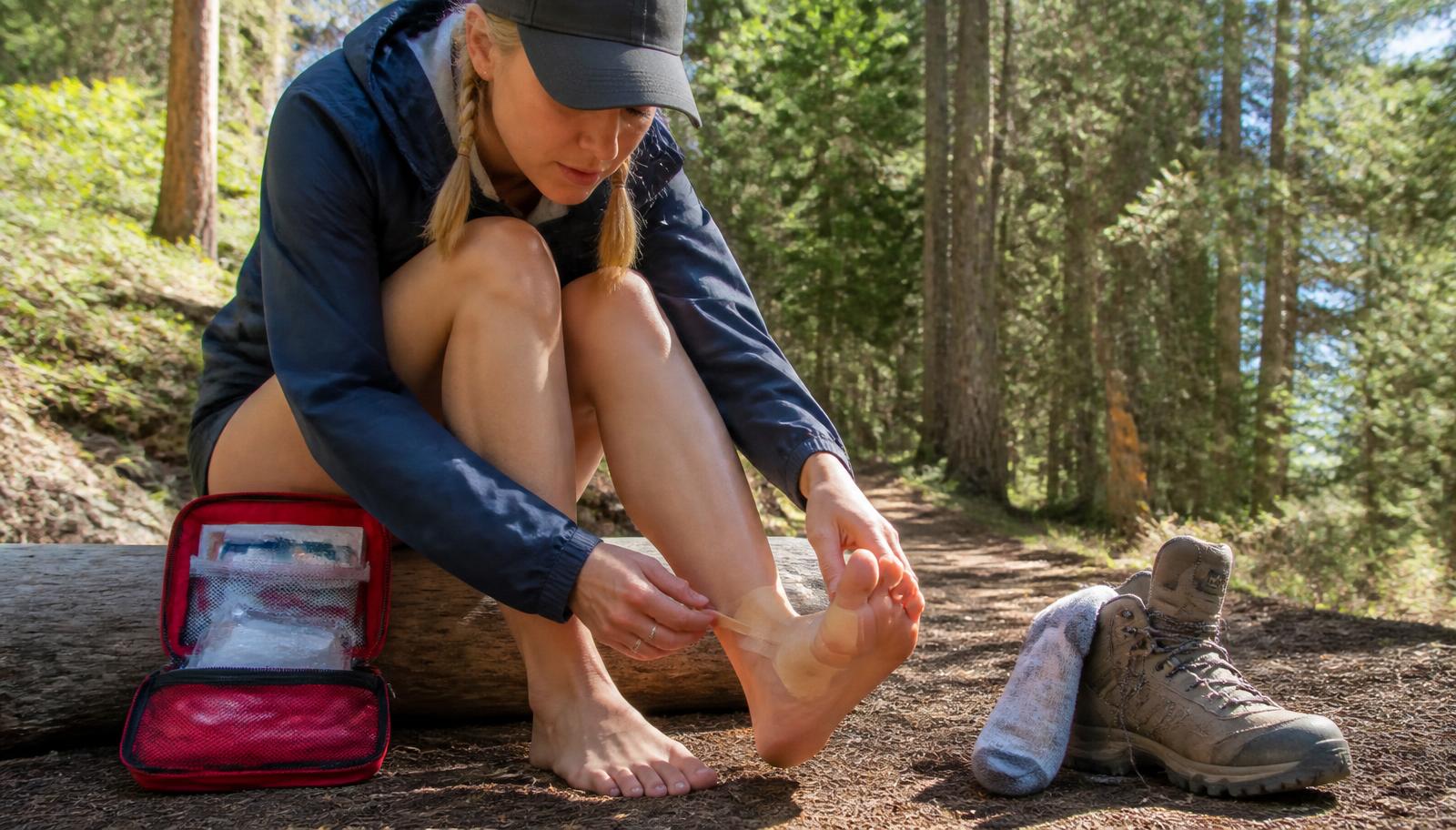
Treatment at the hot-spot stage (before a blister forms): stop immediately. Dry the foot. Apply Leukotape directly to the skin or cover with a hydrocolloid pad like Compeed. Continue hiking.
Treatment after a blister has formed: if small and intact, leave it alone and cover with a doughnut of moleskin to take pressure off. If large or about to pop on its own, sterilize a needle, drain from the side at the lowest point, leave the skin in place as a natural bandage, cover with antibiotic ointment and Leukotape.
Never: pop and remove the skin (huge infection risk), or hike on a torn blister without a barrier. Carry a small foot-care kit in every pack — moleskin, Leukotape, alcohol swab, needle, hydrocolloid pads. Total weight: 1 oz.