
The Highline Trail
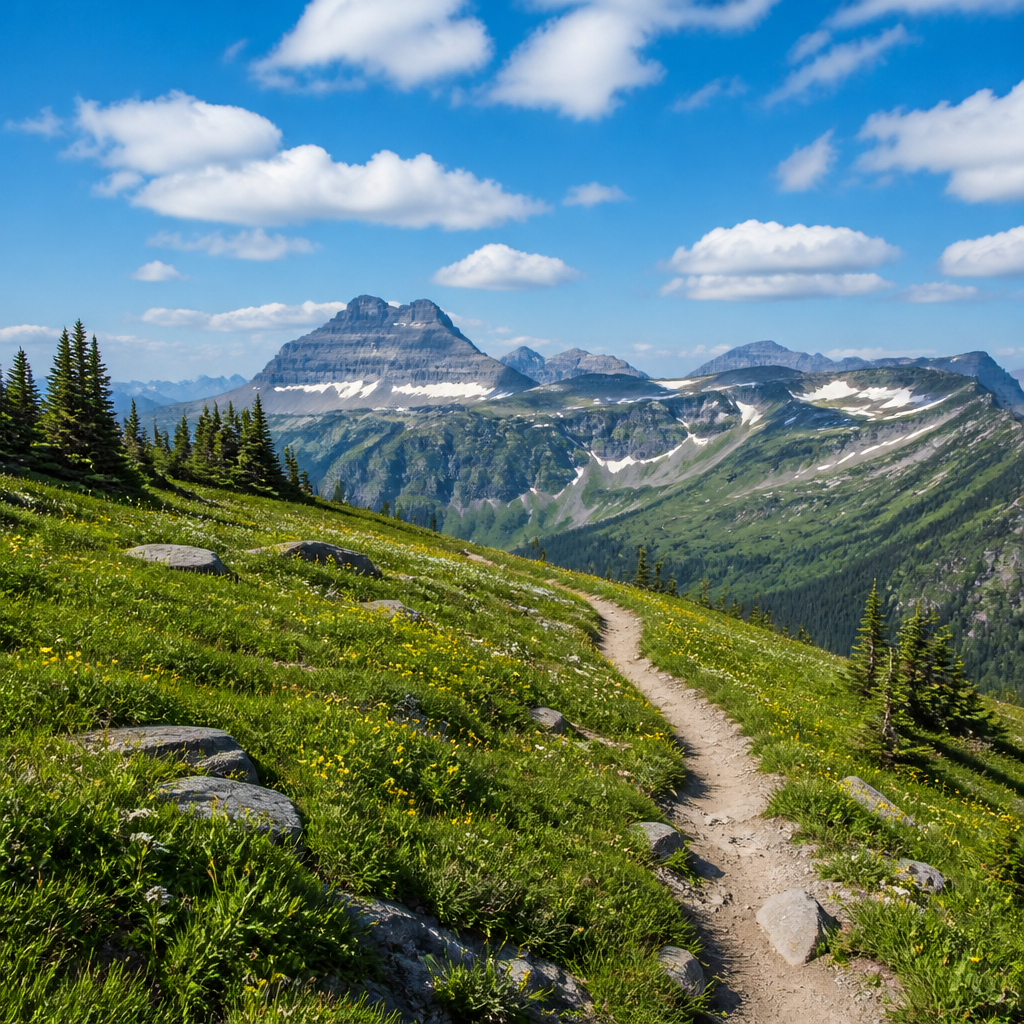
Traversing a spectacular ledge carved into the Continental Divide, the Highline Trail offers world-class alpine scenery without a soul-crushing climb. This iconic Glacier National Park journey showcases expansive valleys, abundant wildlife, and a constant panorama of snow-streaked peaks from the moment you leave the trailhead.
- Difficulty
- moderate
- Distance
- 11.8 mi
- Elevation gain
- 800 ft
- Permit
- Not required
Why It's Special
The Highline Trail is quite possibly the quintessential Glacier National Park experience. It begins at Logan Pass, the crown of the Going-to-the-Sun Road, and immediately delivers staggering views that simply don't quit. Its most famous section, known as the Garden Wall, is a relatively level path cut into a sheer cliff face. For a short distance near the start, a hand-cable bolted to the rock wall provides reassurance as the trail drops off precipitously to the road far below—a thrilling but perfectly safe introduction to the alpine world.
Unlike many summit hikes that save the reward for the end, the Highline is a continuous highlight reel. You'll traverse lush, sloping meadows bursting with wildflowers in mid-summer, all while gazing across the valley at Mount Oberlin, Clements Mountain, and the shimmering canvas of distant glaciers. The trail is also a premier destination for wildlife viewing. It's not uncommon to share the path with docile bighorn sheep or to spot sure-footed mountain goats navigating the cliffs above. The sheer scale and accessibility of its grandeur make the Highline a bucket-list trail that truly lives up to its legendary reputation.
Best Season
Timing is everything for the Highline Trail. Its opening is entirely dependent on the monumental task of plowing the Going-to-the-Sun Road to Logan Pass. This typically happens between late June and early July. The prime hiking season runs from then through late September.
- July & August: This is peak season. Expect the most stable weather, minimal snow on the trail, and a breathtaking explosion of wildflowers, including beargrass, glacier lilies, and Indian paintbrush. This is also the busiest time, so expect crowds.
- September: The crowds begin to thin, and a crispness enters the air. The wildflowers fade, but they are replaced by the stunning gold of turning aspen and larch trees in the latter half of the month. Be prepared for colder temperatures and a higher chance of early-season snow.
Always check the Glacier National Park website for current trail status and road openings before planning your trip.
Logistics
The standard Highline hike is a one-way, 11.8-mile traverse from the Logan Pass Visitor Center to a shuttle stop called The Loop. This route is primarily downhill or level, making its considerable distance manageable for most fit hikers.
- Transportation: The key logistical challenge is transportation. You cannot park a car at both ends. The solution is the park's free shuttle system. The most common strategy is to park at The Loop early in the morning and take the shuttle up to Logan Pass to begin the hike. Alternatively, you can park at the Apgar or St. Mary Visitor Centers and take shuttles from there.
- Parking: Parking at the Logan Pass Visitor Center is extremely limited and often fills before 7:00 AM. Arriving early is not a suggestion; it's a requirement if you plan to park there.
- Reservations: Glacier National Park has implemented a vehicle reservation system for the Going-to-the-Sun Road corridor during peak season. You must have a reservation to access the road, and thus the trailhead. These are highly competitive, so plan to book yours the day they become available online.
Pro Tips
- Go to the Overlook: For a strenuous but unforgettable side trip, take the 0.6-mile spur trail up to the Grinnell Glacier Overlook. It's a lung-busting 1,000-foot climb, but the reward is a jaw-dropping, top-down view of Grinnell Glacier and The Salamander ice field.
- Bear Awareness: This is grizzly country. Carry bear spray, know how to use it, and make noise while you hike. Never approach wildlife.
- Pack for All Weather: The weather at 6,646 feet is notoriously fickle. A sunny morning can turn into a cold, windy, or rainy afternoon in minutes. Dress in layers, and bring a waterproof/windproof jacket, a hat, and gloves, even in August.
- Sun and Water: The trail is almost entirely exposed. Wear sunscreen, a wide-brimmed hat, and sunglasses. Carry at least 2-3 liters of water per person; the high elevation and sun will dehydrate you quickly. The chalet is no longer a reliable water source since its closure, so pack what you need.
- Start Early: Beat the crowds, secure parking or a shuttle spot, and give yourself plenty of daylight for this long but rewarding day on the trail.