Your First Hiking Kit Under $150 (2026)
Getting into hiking shouldn't break the bank. Our 2026 guide shows you how to build a quality beginner hiking kit under $150 with gear that lasts.
So you want to start hiking. You've seen the epic summit photos, imagined the quiet forest trails, and dreamed of that post-hike feeling of tired-but-happy satisfaction. Then you looked at the gear. Three-hundred-dollar jackets? Two-hundred-dollar boots? It's enough to make you think hiking is a sport reserved for an elite club.
We're here to tell you it's not. The secret the big brands don't want you to know is that you don't need to spend a thousand dollars to have a safe, comfortable, and incredible time on the trail. You just need to be smart about your choices.
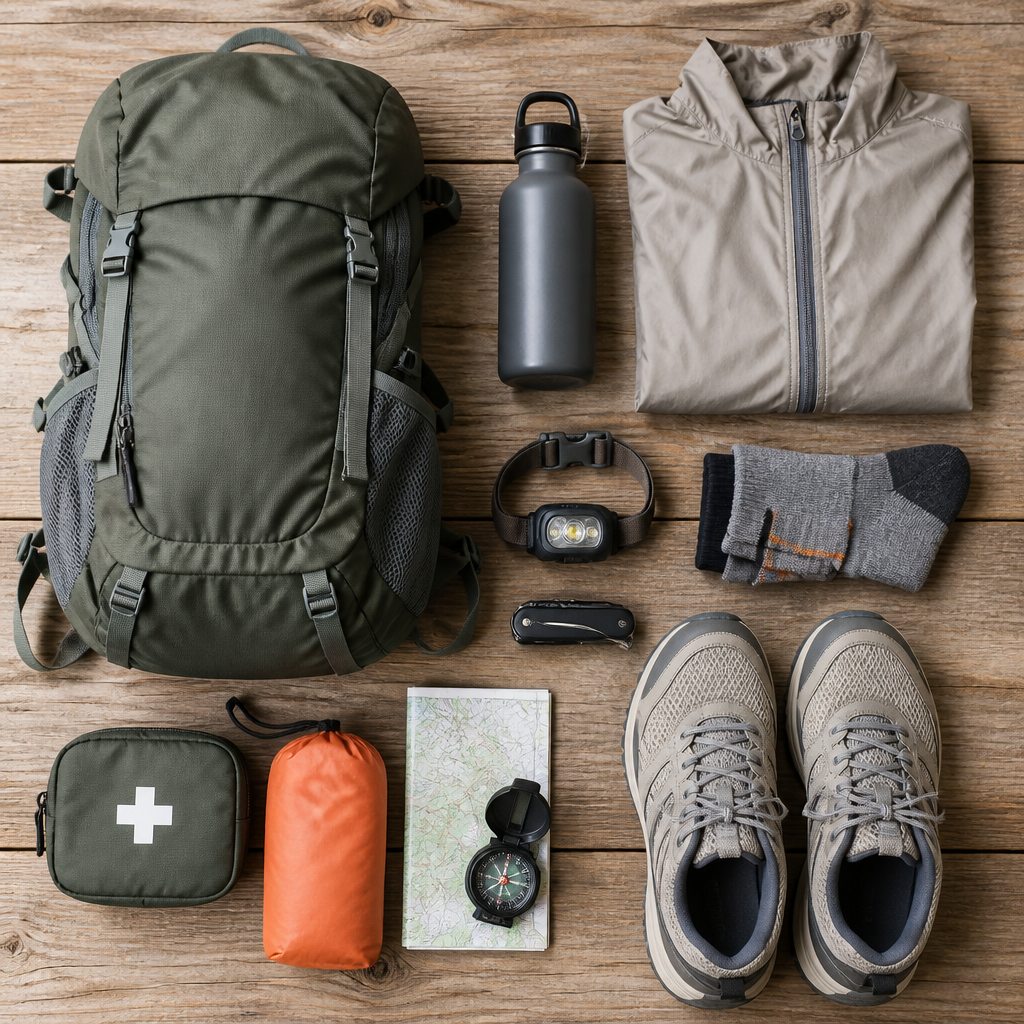
This guide is for you: the curious, aspiring hiker who's ready to go but doesn't want to drain their bank account. We've assembled a complete beginner hiking kit for well under $150, focusing on gear that offers the best value—items that are safe, durable, and perform when you need them to. This isn't the absolute cheapest stuff you can find; this is the smartest stuff you can buy on a budget.
Our Picks at a Glance
- Best Budget Daypack: Ozark Trail 20L Teton Daypack
- Best Value Footwear: ASICS GEL-Venture 9
- The Indestructible Classic: Nalgene 32oz Wide Mouth Bottle
- The Lifetime Investment: Darn Tough Hiker Micro Crew Cushion Socks
- The No-Fuss Essential: Energizer Vision HD+ Headlamp
The Kit in Detail
Here’s a breakdown of each piece, why we chose it, and what you can expect from it on the trail.
Best Budget Daypack: Ozark Trail 20L Teton Daypack
Verdict: A shockingly capable pack for less than the price of a few fancy coffees.
Why we picked it: Let's be clear: a school backpack will not cut it. It will dig into your shoulders, make your back a swampy mess, and lack essential features. For just a little more, the Ozark Trail Teton offers a massive upgrade. It's hydration-reservoir compatible (a feature usually found on much pricier packs), has two side water bottle pockets, and includes a sternum strap to help stabilize the load. At 20 liters, it’s the perfect size for carrying a rain jacket, lunch, water, and the other essentials on this list. It’s the definition of a high-value entry point into proper gear.
Best for: Day hikes from 3 to 8 miles on established trails where you need to carry a layer, food, and water.
Trade-offs: The back panel has minimal ventilation, so you'll still get a sweaty back on hot days. The simple webbing hip belt offers stabilization but won't transfer significant weight like the padded hip belts on packs costing 5x more.
Best Value Footwear: ASICS GEL-Venture 9
Verdict: The perfect do-it-all trail shoe that won't punish your feet or your wallet.
Why we picked it: Forget what you've heard about needing stiff, heavy, over-the-ankle boots to start hiking. For the majority of beginner and intermediate trails, a quality trail running shoe is not only sufficient—it's often superior. The ASICS GEL-Venture 9 is a perennial favorite for a reason. It has an aggressive outsole that grips dirt, gravel, and rock far better than any street sneaker. The GEL cushioning in the heel absorbs impact, keeping your joints happy. They're comfortable right out of the box with virtually no break-in period. You can often find them on sale for around $50-60, making them an incredible bargain.
Best for: New hikers on everything from local park paths to moderately rocky mountain trails.
Trade-offs: These are not waterproof. While that means they breathe exceptionally well (reducing blisters), a deep puddle will mean wet feet. They also offer less ankle protection than a mid- or high-cut boot, so hikers with a history of ankle rolls may want to consider a boot instead.
The Indestructible Classic: Nalgene 32oz Wide Mouth Bottle
Verdict: The one piece of gear on this list you'll almost certainly still be using in a decade.
Why we picked it: In a world of complicated, insulated, and expensive water bottles, the classic Nalgene remains king of the trail. Made from ultra-durable, BPA-free plastic, it's virtually bombproof—you can drop it, freeze it, and run it through the dishwasher without a second thought. The wide mouth makes it easy to clean and even easier to fill from streams if you decide to get a water filter down the line. Plus, the measurement markings on the side are great for tracking your hydration or portioning out water for camp meals.
Best for: Literally everyone, everywhere. It's the standard for a reason.
Trade-offs: It's not insulated. On a hot day, your ice-cold water will be lukewarm in an hour. That's it. That's the only downside.
The Lifetime Investment: Darn Tough Hiker Micro Crew Cushion Socks
Verdict: The most expensive item per ounce on this list, and worth every single penny.
Why we picked it: If there is one place you absolutely should not skimp, it's your socks. Cotton socks are the #1 cause of blisters; they absorb sweat, get soggy, and cause friction. Good merino wool socks, like these from Darn Tough, are the solution. They wick moisture away from your skin, regulate temperature (warm when it's cool, cool when it's hot), and are naturally antimicrobial, so they won't stink after one use. The real kicker? Darn Tough has an unconditional lifetime guarantee. If you ever get a hole in them, they'll replace them for free. You are not buying a pair of socks; you are buying socks for life.
Best for: Preventing the single most common hike-ruiner: blisters.
Trade-offs: The initial price tag can feel steep for a single pair of socks. Trust us, it's cheaper than buying a new 6-pack of cotton socks every year and dealing with painful blisters.
The No-Fuss Essential: Energizer Vision HD+ Headlamp
Verdict: A bright, reliable, and dead-simple headlamp from a brand you can find anywhere.
Why we picked it: Every hiker, no matter how short the planned hike, needs a light source. A trail can take longer than you think, a wrong turn can cost you an hour, and being caught in the woods after sunset without a light is a dangerous and terrifying situation. Your phone's flashlight is not a substitute. A headlamp keeps your hands free to hold poles, scramble over rocks, or check a map. The Energizer Vision HD+ is an affordable, dependable choice that punches well above its weight. It's bright enough for any night hiking situation, has a useful red-light mode to preserve night vision, and runs on standard AAA batteries you can buy at any gas station.
Best for: Peace of mind and safely navigating back to your car if your hike runs late.
Trade-offs: It lacks the super-high lumen counts and rechargeable battery packs of premium models from brands like Petzl or Black Diamond. For a beginner, that's a perfectly acceptable trade.
Your $150 Hiking Kit: Spec Comparison
| Item Category | Our Pick | Estimated Price | Key Feature / Why It's a Smart Buy | | ------------------ | ------------------------------------- | --------------- | -------------------------------------------------- | | Daypack | Ozark Trail 20L Teton | ~$20 | Hydration compatible, beats a school backpack | | Footwear | ASICS GEL-Venture 9 | ~$60 | Superior grip and cushion, great value trail runner| | Hydration | Nalgene 32oz Wide Mouth Bottle | ~$15 | Indestructible, easy to clean, versatile | | Socks | Darn Tough Hiker Micro Crew Cushion | ~$25 | Blister prevention, lifetime guarantee | | Safety Light | Energizer Vision HD+ Headlamp | ~$15 | Non-negotiable safety item, reliable and simple | | TOTAL | | ~$135 | Prices are estimates and may vary based on sales |
How We Built This Kit
Our philosophy for this kit was simple: maximize value and safety without cutting corners on what truly matters. We didn't hunt for the absolute cheapest option in every category. Instead, we looked for the sweet spot where a small increase in price yields a massive jump in performance, comfort, and durability.
- Focus on the Core: We covered the essentials: a way to carry your gear, protect your feet, stay hydrated, and stay safe in the dark.
- Prioritize Feet: Bad footwear and socks can end a hike before it starts. This is where we spent the bulk of the budget, as it provides the most significant return in comfort and injury prevention.
- Assume You Have Clothes: We assume you own a pair of athletic shorts or pants and a non-cotton t-shirt. You don't need special hiking pants or a merino baselayer to start.
- Build a Foundation: Each item in this kit is a solid piece of gear that you can continue to use even as you upgrade other items. Your Nalgene and Darn Tough socks will be with you for years, maybe even decades.
Frequently Asked Questions
Q: Do I really need hiking boots to start hiking?
No. This is a common myth. For most maintained trails that beginners will be on, a sturdy trail running shoe like the ASICS in this guide is lighter, more breathable, and more comfortable. You only need to consider boots if you are carrying a very heavy pack (30+ lbs) or have a history of severe ankle instability.
Q: What other cheap hiking gear should I consider adding next?
The first thing we'd add is trekking poles. The TrailBuddy Trekking Poles on Amazon are an excellent budget choice (~$25) and will save your knees on descents. Second, a small, pre-made first-aid kit like the Johnson & Johnson Mini First Aid Kit is a wise and inexpensive addition.
Q: Can I just use my school backpack?
You can for a short, flat 1-mile walk. But for anything longer or with any elevation gain, you will be much happier with a dedicated daypack. The sternum strap, water bottle pockets, and more ergonomic shoulder straps make a world of difference in comfort for just $20.
Q: Are a map and compass really necessary with my phone?
For a beginner on well-marked, popular trails, using a GPS app on your fully charged phone (like the free version of Gaia GPS) is generally acceptable. However, phones die and electronics fail. Learning to use a simple compass, like a Suunto A-10, is a fundamental skill that every hiker should eventually learn. It’s an inexpensive piece of life-saving equipment.