
The Edge of Silence: Finding Iceland's Soul in the Westfjords
Leave the crowded Ring Road behind and venture to the island's frayed northwestern edge. In the Westfjords, a fractal coastline of staggering beauty and profound solitude, Iceland reveals its oldest, quietest, and most magical self.
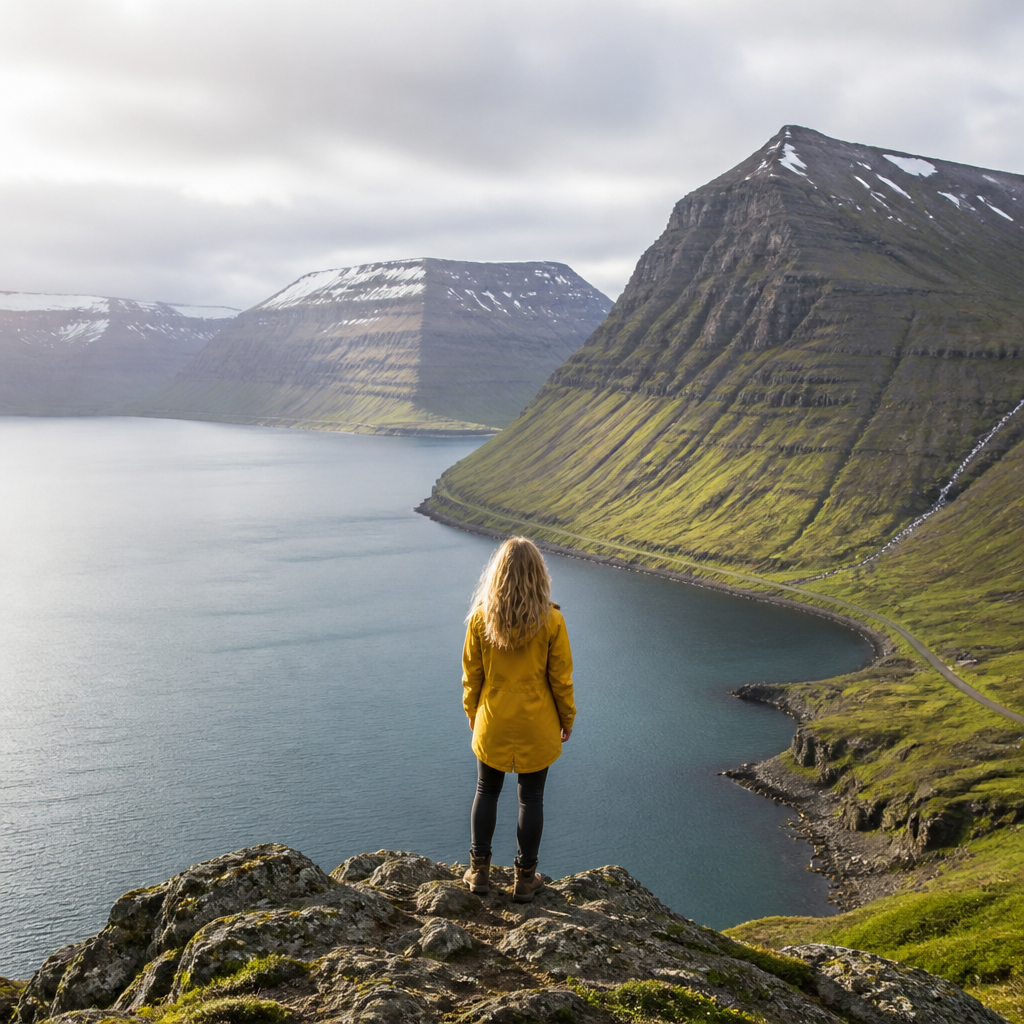
There is a moment on the road to the Westfjords, hours after you’ve left the orbit of Reykjavík’s undeniable cool and the last of the Golden Circle tour buses have vanished from your rearview mirror, when the landscape begins to change. It’s not a sudden shift, but a gradual subtraction. The trees thin out and disappear. The farms become fewer, huddled closer to the sea. The road, which had been a confident ribbon of asphalt, narrows, its shoulders fraying. This is where Iceland begins to whisper its secrets. You are leaving the island of geysers and glaciers that fills the brochures and entering something older, something wilder. You are heading for the edge.
The Westfjords are Iceland’s forgotten peninsula, a gnarled hand reaching from the country’s northwestern corner into the frigid waters of the Denmark Strait. On a map, it looks like an afterthought, a coastline scribbled by a trembling hand. In reality, it is the country’s geological elder, carved from basaltic lava flows some 16 million years ago. While the rest of Iceland was still being forged in fire, the Westfjords were being patiently scoured by ice, leaving behind the dramatic, deep fjords that define the region today. To travel here is to travel back in time.
The Unfurling Map
The journey itself is a core part of the experience. The road clings to the coast, a sinuous path that dips into one fjord only to climb a breathtaking pass and descend into the next. Each fjord is a self-contained universe, with its own weather, its own light, its own personality. In the south, the fjords are wide and green, their slopes gentle enough for sheep to graze. As you push north, the landscape becomes more severe. The mountains press in, their scree-covered flanks plunging directly into the steel-grey water. Waterfalls, dozens of them, cascade from unseen heights, their spray misting the road.
Driving here is a meditative act. You cannot rush. The pavement gives way to gravel, and switchbacks demand your full attention. But the rewards are constant. A pod of whales breaching in the distance. A curious seal popping its head above the waves. A lone farmhouse painted a defiant red against the immense green and grey. The region’s unofficial capital, Ísafjörður, feels like a metropolis in this context, though it’s a town of just 2,600 people. It’s a vital, charming hub nestled on a sandspit, surrounded on three sides by towering, flat-topped mountains that look like colossal altars to the sky. It is a place to refuel, both your car and your spirit, before pushing even further into the wilderness.
In the Footsteps of Giants
This rugged land is steeped in a history as dramatic as its geology. This is the Iceland of the Sagas, a place of outlaws, chieftains, and profound hardship. The isolation that now draws travelers seeking peace was once a sentence of brutal survival. Every cove and valley seems to hold a story, a ghost. In the tiny coastal town of Hólmavík, the Museum of Icelandic Sorcery & Witchcraft offers a fascinating, and at times unsettling, glimpse into this past. It speaks of a time when the boundary between the natural and supernatural was porous, when spells were cast to command the weather or claim a neighbor’s milk, and when the price for such ambitions could be death.
You feel this history in the air. You see it in the turf-roofed farmhouses slowly being reclaimed by the earth, and in the small, windswept cemeteries where the gravestones lean against the constant wind. This is not a landscape that has been tamed; it is one that humans have only ever been permitted to tentatively inhabit. This deep sense of history adds a profound dimension to any hike. You aren't just walking across a beautiful landscape; you are walking through layers of human struggle, belief, and myth.
The Hornstrandir Promise
For the truly committed, the ultimate Westfjords experience lies at its northernmost tip: the Hornstrandir Nature Reserve. Abandoned by its last permanent residents in the 1950s, this is now a kingdom of arctic foxes, nesting seabirds, and absolute, magnificent emptiness. There are no roads, no shops, no permanent infrastructure. Access is by a small fleet of ferries that operate during the brief summer months, dropping hikers off on remote beaches to fend for themselves.
To be left on the shores of Hornstrandir is a feeling unlike any other. The boat’s engine fades, and a silence descends that is so complete it feels physical. It is a silence filled by the rush of wind over tundra, the cries of thousands of kittiwakes on a cliff face, and the gentle lapping of the tide. This is a hiker’s paradise, but one that demands respect. The weather is notoriously fickle, trails are often just faint paths through fields of wildflowers, and your only companions might be the arctic foxes, famously unafraid of humans in this protected realm. They will watch you from a distance, their curiosity a reminder that you are a visitor in their world. Days are spent trekking from one abandoned fjord to the next, crossing snowfields in July, and marveling at the sheer tenacity of life at the edge of the Arctic Circle.
The Quiet Reward
Not everyone who comes to the Westfjords needs to embark on a multi-day trek through Hornstrandir. The reward of this region is not necessarily in conquering it, but in surrendering to its pace. The truest moments of magic are often the quietest: soaking in a rustic geothermal hot pot overlooking a fjord, its warm waters a perfect contrast to the crisp air; finding the world’s best waffles in a tiny, unassuming cafe in the middle of nowhere; watching the sun refuse to set during the midsummer twilight, painting the sky in hues of pink and gold for hours on end.
This is the antithesis of a checklist vacation. The Westfjords ask for your time, your patience, and your attention. They reward you not with single, iconic sights, but with a pervasive feeling—of peace, of scale, of connection to something ancient and elemental. When you finally turn your car around and begin the long drive back to the modern world, the feeling lingers. The silence of the fjords lodges itself in your soul. You’ve been to the edge, and it has reminded you of where the center is.
<!-- seo-rank-booster:v1 -->Frequently Asked Questions
Why should I visit the Iceland Westfjords?
The Westfjords offer a chance to see a wilder, more authentic side of Iceland, far from the crowds of the Ring Road. This remote peninsula is defined by dramatic fjords, abundant wildlife, and a profound sense of solitude, making it ideal for travelers seeking an off-the-beaten-path adventure.
Is it difficult to drive in the Westfjords?
Driving in the Westfjords can be challenging due to narrow roads, long stretches of gravel, and steep mountain passes with switchbacks. This forces a slower pace, which is part of the experience, offering stunning coastal views. Always check current road conditions, especially if traveling outside the peak summer months.
What is the best time of year to visit the Westfjords?
The best time to visit the Iceland Westfjords is during the summer months, from June to August. During this period, most roads are open, hiking trails are accessible, and all services are fully operational, allowing you to explore the region's rugged beauty under the midnight sun.
How many days do you need for the Westfjords?
To truly appreciate the region's scale and do justice to the slow-paced driving, you should plan for at least 5 to 7 days. This allows ample time to navigate the winding fjords, make spontaneous stops for hikes and photos, and soak in the unique atmosphere of the small fishing villages.
What are the main attractions in the Westfjords?
Beyond the breathtaking drive itself, key attractions include the charming hub town of Ísafjörður, the incredibly remote Hornstrandir Nature Reserve for serious trekking, and the dramatic bird cliffs of Látrabjarg. The region is also rich in history, with sites like the Museum of Icelandic Sorcery & Witchcraft offering a glimpse into its mythic past.
Related on Bucketlist Field Guide
- The Iceline Trail — For another epic hike that brings you face-to-face with the power of glaciers in a stunning, otherworldly landscape.
- Harding Icefield Trail — Explore another landscape defined by ancient ice on this trek to the edge of a massive Alaskan icefield.
- Kalalau Trail (Hanakapiai Falls) — If the Westfjords' dramatic, isolated coastline inspires you, consider this legendary and rugged coastal trail in Hawai'i.
- Mount Katahdin and the Knife Edge — Test your nerve on a thrilling scramble that echoes the severe, exposed beauty of the Westfjords' mountain peaks.