
The Bloom and the Boom: How to Love Alpine Wildflowers Without Leaving a Trace
As high-country trails melt out, a fragile explosion of color blankets the alpine tundra. Here’s how to be a steward of these incredible, short-lived ecosystems while you soak in their beauty.
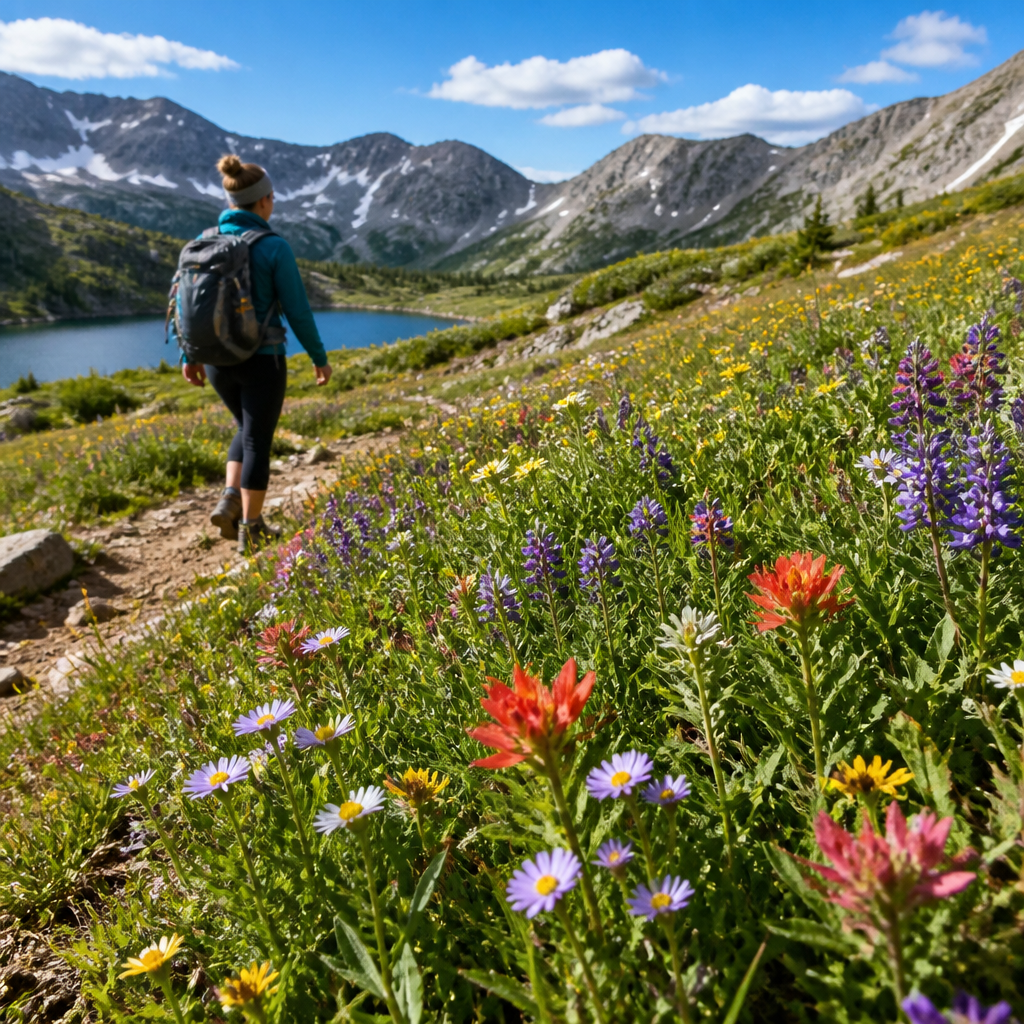
There’s a moment on an early summer hike that feels like a reward. You climb for hours through the dense, silent forest, switchbacking up through pine and fir. The air thins, the trees shorten, and then, you break through the timberline. Before you is a sight that stills the heart and quiets the breath: a sprawling alpine meadow, awash in a riot of impossible color. Reds, blues, yellows, and purples sway in the breeze under a vast, open sky. This is the bloom—the fleeting, miraculous life of alpine wildflowers.
And with it comes the boom—the surge of fellow hikers, photographers, and nature lovers, all drawn to the same magnificent spectacle. This intersection of natural wonder and human enthusiasm is a beautiful thing, but it places us at a critical juncture. How do we immerse ourselves in this beauty without loving it to death? The answer lies in understanding the profound fragility hidden within this display of resilience.
The Miraculous, Fleeting Life of an Alpine Flower
To truly appreciate an alpine meadow, you have to understand the incredible adversity these plants overcome. Life above the trees is a constant battle. For nine to ten months of the year, this landscape is buried under snow, frozen solid. The growing season is a frantic, compressed sprint of just a few weeks. In that short window, a plant must emerge from the snow, grow, flower, get pollinated, and produce seeds for the next generation.
They endure desiccating winds, intense solar radiation, and dramatic temperature swings, often from freezing to sweltering in a single day. To survive, they have adapted in remarkable ways. Many grow low to the ground in dense cushions for warmth and protection from wind. Some have hairy leaves to trap moisture and block UV rays. They are masters of survival.
But this resilience has a trade-off: they are incredibly slow-growing and have delicate, shallow root systems. A single-celled organism is more complex than the thin layer of soil they cling to. A misplaced footstep can crush a plant that took a decade to mature. The damage from one person straying off-trail can persist for generations, creating a scar that invites further trampling. When we see a field of Indian Paintbrush or a cluster of sky-blue Columbine, we’re not just seeing this year’s bloom; we’re witnessing the result of decades, even centuries, of persistence.
Walking Softly in a World of Color
The most impactful way to protect these ecosystems is to manage our own two feet. It sounds simple, but in the face of such overwhelming beauty, the temptation to get a closer look or a better photo can be strong. Here’s how to walk the walk of a true mountain steward.
Stay on the Trail. No Exceptions. This is the golden rule. The trail is what we call a “durable surface.” It’s already been impacted and hardened. The surrounding tundra, no matter how resilient it looks, is not. Even if the trail is muddy, snowy, or wet, please go directly through the middle of it. Walking around a puddle or a snowfield is what creates trail braiding and widens the path, slowly but surely eroding the meadow from its edges. Your boots will dry.
Beware the “Social Trail.” You’ve seen them: faint paths that branch off the main trail, heading toward a viewpoint or through a particularly dense patch of flowers. These are “social trails,” created by people making the same mistake over and over. They are not official trails. Do not follow them. They are scars, pure and simple. Resisting their siren song is a powerful act of conservation.
Get the Shot, Responsibly. We all want to capture the memory. The key is to do it without impact. Use a zoom lens to bring the flowers to you, rather than going to them. Get low on the trail itself and shoot upwards to fill the frame with color—this perspective often creates a more stunning and intimate photo anyway. Never, ever lie down in a meadow, set your backpack in the flowers, or—and it should go without saying—pick them. A flower in your hand dies in an hour; a flower left on its stem creates the seeds for next year's bloom.
Beyond Your Footsteps: Become an Alpine Advocate
Your personal commitment is the foundation, but you can magnify your positive impact by thinking beyond your own boots.
If you see someone walking off-trail, consider speaking up. This can be intimidating, but a gentle, friendly approach is often effective. Try something like, “This view is incredible, isn't it? The ecosystem is so fragile up here, the rangers ask us to stay right on the trail.” You’re not being a cop; you’re being a fellow steward, sharing crucial knowledge.
Take your passion a step further. Volunteer for a trail maintenance day with a local stewardship organization. Learn to identify a few of the common wildflowers in your region—the Glacier Lily, the Pasqueflower, the Sky Pilot. Being able to put a name to a face deepens your connection and makes you an even more passionate advocate for their protection.
Ultimately, visiting the alpine bloom is a privilege. It’s a chance to witness life at its most tenacious and beautiful. The greatest way we can honor that gift is to ensure that the only thing we leave behind is our footprints on the designated path, and the only thing we take with us is a sense of wonder, a full memory card, and a quiet gratitude for the wildness of it all.