
The Art of Sharing the Trail: Leave No Trace for the High Season
As our favorite trails become more popular, our collective responsibility to protect them grows. This guide offers practical, expert advice on applying Leave No Trace principles to crowded summer landscapes, ensuring they remain wild and beautiful for all.
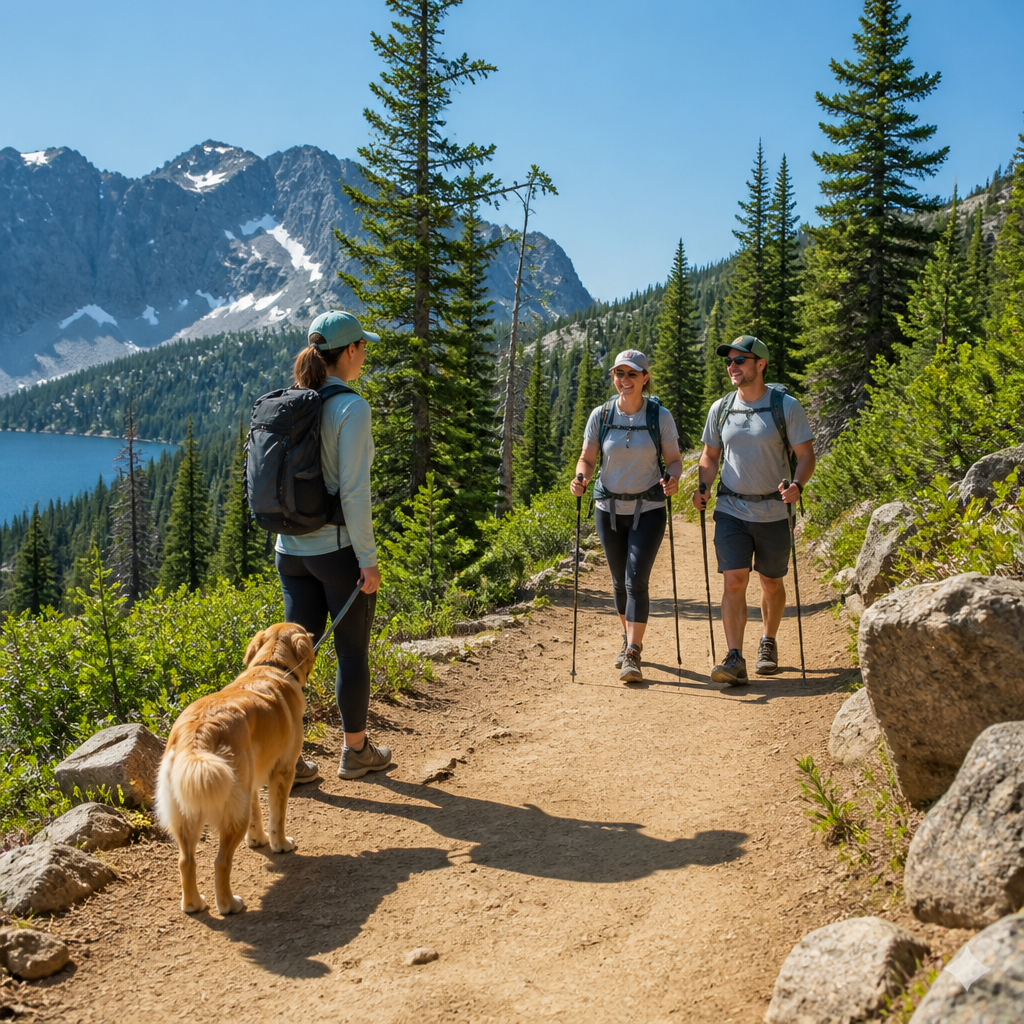
The long, sun-drenched days of summer are a siren song for adventurers. After a season of shorter days and cooler temperatures, the pull of the mountains, forests, and deserts is irresistible. We pour onto trailheads with an infectious energy, eager to stretch our legs, breathe in the scent of pine and warm earth, and reconnect with the wild places that sustain us. And with this shared enthusiasm comes a shared reality: our favorite trails are getting busy.
It’s easy to feel a twinge of frustration when a planned moment of solitude is interrupted by a dozen other hikers, or when a once-pristine viewpoint feels more like a city park. But seeing more people outdoors is ultimately a wonderful thing—it means more people are building a connection with nature, a connection that is the very foundation of conservation. The challenge isn't the number of people, but how we, as a community, manage our collective presence. This is where the Leave No Trace ethic evolves from a personal checklist into a shared art form of stewardship and grace.
More Than Just Your Trash
When we talk about Leave No Trace (LNT), the first principle that often comes to mind is “Pack It In, Pack It Out.” It’s a vital, non-negotiable rule. But on a crowded trail, our impact goes far beyond a forgotten granola bar wrapper. A high-traffic environment amplifies every single choice we make. The seven principles of Leave No Trace provide a holistic framework for minimizing this cumulative effect, and during the high season, a few of them require our special attention.
The Path of Least Resistance: Principles 2 & 3
Travel and Camp on Durable Surfaces & Dispose of Waste Properly.
On a busy trail, the path itself is under immense pressure. The desire to give others space, pass a slower group, or simply avoid mud can tempt us to step off the designated tread. This small act, when repeated hundreds or thousands of time a day, is what creates “social trails” and “trail braiding.” These unofficial paths trample fragile vegetation, compact soil, and accelerate erosion, widening the trail’s scar on the landscape. The rule is simple and absolute: stay on the trail. If you need to pass, wait for a durable spot like a rock or a wide, hard-packed section. If you’re in a group, walk single-file to minimize your footprint.
Proper waste disposal also gets more complex. We all know not to leave trash, but what about “natural” items? That orange peel or handful of pistachio shells you toss into the bushes will take months, even years, to decompose, and in the meantime, it habituates wildlife to human food. In high-use areas, this is a major problem. Pack out everything, including food scraps. Furthermore, trailhead restrooms can become overwhelmed. Always carry a “potty kit” with a trowel, toilet paper, and a sealable bag to pack it out, just in case you need to go in the backcountry. Proper cathole etiquette (200 feet from water, trails, and camp; 6-8 inches deep) is more critical than ever when the odds of someone else stumbling upon the area are high.
The Collective Impact: Principle 4
Leave What You Find.
This principle is about resisting the urge to alter the landscape. One hiker building a small rock cairn seems harmless. But when fifty hikers a day add a rock, you suddenly have a dozen new, unnecessary structures that detract from the natural character of the place and can confuse hikers who rely on official cairns for navigation. The same goes for taking a souvenir—a cool rock, a piece of wood, a wildflower. Imagine if every one of the thousands of visitors to a National Park took just one rock. The cumulative impact is staggering. The best way to preserve a memory is with a photograph, leaving the landscape exactly as you found it for the next person to discover and enjoy.
The Social Contract: Principles 6 & 7
Respect Wildlife & Be Considerate of Other Visitors.
This is the heart of navigating a busy trail. Wildlife in popular areas are often stressed and habituated. Never feed animals. Keep a respectful distance, using a zoom lens for photos. Your presence changes their behavior, and getting too close can be dangerous for both you and the animal.
Being considerate of others is the golden rule of the trail. It means yielding to uphill hikers, who have the right of way. It means keeping your voice down and opting for headphones instead of a Bluetooth speaker—let the sounds of nature be the shared soundtrack. Keep group sizes manageable and be mindful of how much space you’re occupying at a viewpoint or rest stop. Acknowledging others with a simple nod or a quiet “hello” transforms the experience from a competition for space into a shared journey. We are all out there for similar reasons, and fostering a sense of community, even with strangers, is the most powerful tool we have for protecting the places we love.