
Osprey Atmos vs Gregory Baltoro: Which to Buy in 2026?
Stuck between the Osprey Atmos and Gregory Baltoro? Our 2026 field test breaks down fit, comfort, and load-carry to help you choose the right pack.
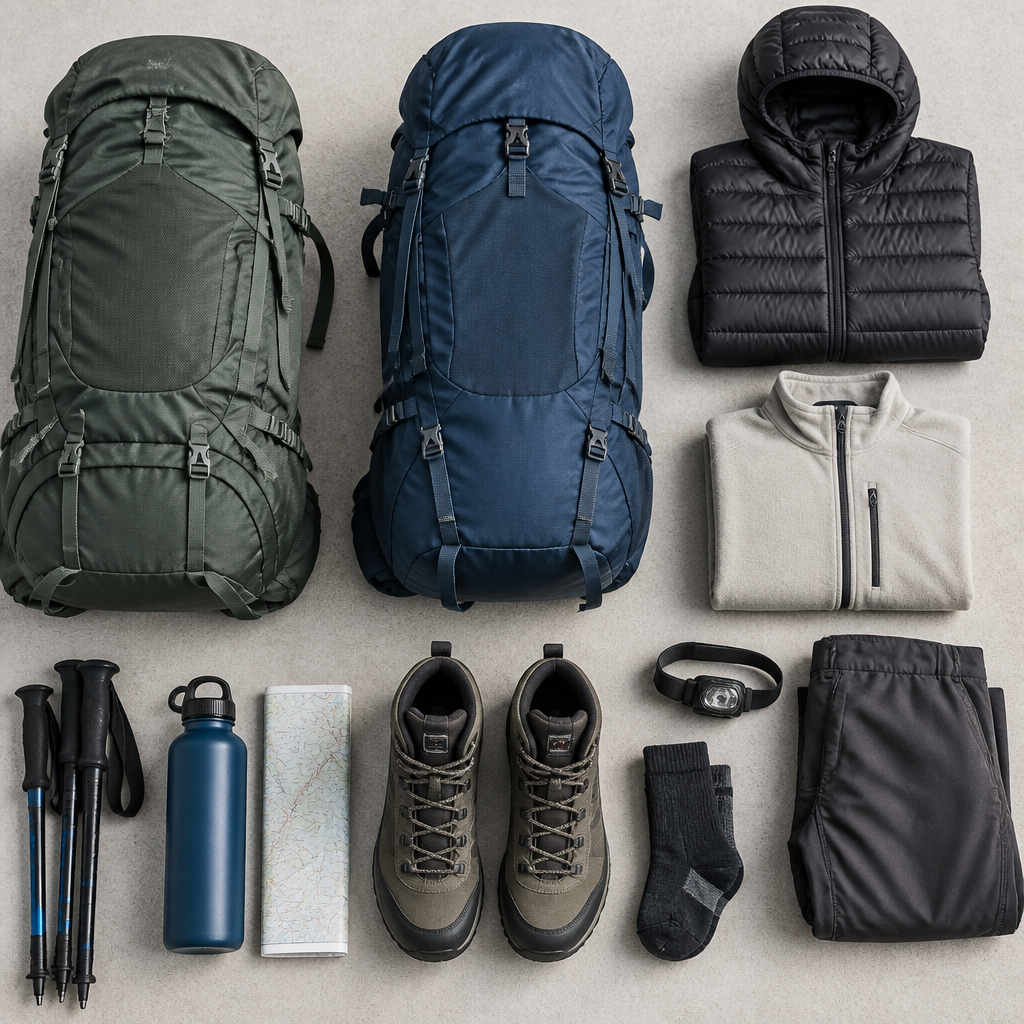
You’ve narrowed it down to the two titans of backpacking. The legends. The Ford and Chevy of the multiday pack world. Choosing between the Osprey Atmos AG and the Gregory Baltoro is a rite of passage for serious hikers. Both are perennial award-winners, beloved for their comfort and capability. But they achieve that comfort in fundamentally different ways, making each one the perfect pack for a different kind of hiker.
So, which one is for you? We’ve spent hundreds of miles with both packs, loading them down, sweating up switchbacks, and dialing in the fit. We're here to cut through the marketing jargon and tell you exactly which pack wins in which category, and which one you should buy for your adventures in 2026.
The Verdict for Most Hikers in 2026
For the majority of backpackers heading out for weekend trips or weeklong adventures with standard loads (25-40 pounds), the Osprey Atmos AG 65 is the winner. Its revolutionary Anti-Gravity (AG) suspension provides an unparalleled combination of ventilation and a body-hugging fit that makes the pack feel lighter than it is. It’s the king of comfort in hot weather and for hikers who prioritize a seamless, 'part-of-you' feel.
However, if your trail name might as well be 'Sherpa'—if you're guiding, carrying gear for two, or embarking on long expeditions with loads consistently cresting 40 pounds—the Gregory Baltoro 65 is your rig. Its robust suspension system is built to manage heavy weight with more stability and direct load transfer, making it the workhorse champion.
Spec Comparison: Atmos AG 65 vs. Baltoro 65 (2026)
| Feature | Osprey Atmos AG 65 | Gregory Baltoro 65 | | :--- | :--- | :--- | | Volume | 65 Liters (Medium) | 65 Liters (Medium) | | Weight | ~4.6 lbs / 2.09 kg | ~4.9 lbs / 2.22 kg | | Max Load | 30 - 40 lbs | 45 - 50 lbs | | Suspension | Osprey Anti-Gravity (AG) | Gregory Response A3 | | Main Fabric | Bluesign® approved recycled 210D nylon | 210D Honeycomb & 420D HD Nylon | | Included Raincover | Yes | Yes | | MSRP (2026) | ~$340 | ~$350 |
Fit and Comfort: The Hug vs. The Pivot
This is the core of the debate. Both packs are comfortable, but they feel completely different on your back.
Osprey Atmos AG: The Atmos is famous for its Anti-Gravity suspension, a seamless panel of lightweight mesh that extends from the top of the backpanel down into the hipbelt. When you put it on and tighten the hipbelt, it doesn't just rest on your hips—it wraps around them. We call this the 'Osprey hug.' It conforms perfectly to your body, eliminating pressure points and creating a sense that the pack is an extension of your torso. The downside? Some hikers find this full-wrap feel a bit restrictive, especially around the hips.
Gregory Baltoro: The Baltoro uses the Response A3 suspension, which stands for Automatic Angle Adjust. The shoulder straps and hipbelt panels are independently connected to the frame and pivot in response to your body's natural walking motion. This means that as your right hip moves up, the pack doesn't fight it. This 'dynamic fit' feels incredibly stable and is a huge benefit for carrying heavy loads over uneven terrain. It feels less like a hug and more like a high-tech hiking chassis that’s working with you.
Winner: Osprey Atmos AG (for most users). The immediate, form-fitting comfort of the AG system is hard to beat for standard loads.
Load-Carrying and Suspension
Here’s where the tables turn. A pack’s suspension is its engine, and these two are tuned for different purposes.
Osprey Atmos AG: The Atmos is a dream for loads up to about 40 pounds. The tensioned mesh backpanel does a great job of transferring weight to the hips, and the pack moves beautifully with you. However, once you push past that 40-pound mark, you can start to feel the limits of the mesh system. Heavier loads can cause the pack to 'bottom out' against the frame, reducing the ventilation gap and creating a slightly saggy feel.
Gregory Baltoro: The Baltoro was born to carry weight. Its internal aluminum frame is more rigid, and the pre-curved hipbelt and shoulder straps are made from denser, more supportive foam. The Response A3 system excels at directing the load squarely onto your skeletal structure. When you hoist a 45-pound load in the Baltoro, it feels planted and secure in a way the Atmos can’t quite match. The pivoting hipbelt prevents the pack from swaying and keeps the weight centered over your feet.
Winner: Gregory Baltoro. If you consistently carry over 40 pounds, there is no contest.
Ventilation
If you hike in the humid Southeast, the scorching Southwest, or just run hot, this category could be the deciding factor.
Osprey Atmos AG: This is the easiest call of the entire comparison. The Atmos is the most well-ventilated framed pack on the market, period. The tensioned mesh backpanel creates a massive air gap—we're talking an inch or more—between your back and the pack body. The breeze flows freely, dramatically reducing the dreaded 'swamp back' that plagues most hikers on a hot day. It’s a game-changer.
Gregory Baltoro: Gregory has made huge strides in ventilation. The Baltoro’s backpanel features a matrix of foam pods with deep air channels, and it’s surprisingly breathable for such a beefy pack. It's perfectly adequate for most conditions. But it simply cannot compete with the open-air design of the Atmos. Your back will be in direct contact with the foam pods, and on a hot, humid climb, you will sweat.
Winner: Osprey Atmos AG. It's not even close.
Features and Organization
Both packs are loaded with thoughtful features, but they cater to slightly different organizational styles.
Osprey Atmos AG: The Atmos has a well-rounded feature set. Key highlights include:
- Stow-on-the-Go™ Trekking Pole Attachment: A brilliant feature for quickly stashing your poles without taking the pack off.
- Dual-Access Side Pockets: You can grab a water bottle from the side or top.
- Large Front Stretch Mesh Pocket: Perfect for stuffing a wet rain jacket or layers.
- Floating Top Lid: Removable for saving weight, with two zippered pockets.
Gregory Baltoro: The Baltoro often feels like it has a pocket for everything. It's an organizer's dream.
- Full U-Zip Front Access: The entire front panel zips open like a suitcase, making it incredibly easy to find gear without unpacking everything.
- Sidekick Daypack: The internal hydration sleeve doubles as a minimalist, removable summit pack.
- WeatherShield Hipbelt Pocket: One of the hipbelt pockets is waterproof, perfect for a phone or GPS.
- Sunglass QuickStow: A simple loop on the shoulder strap to securely hang your shades.
Winner: Gregory Baltoro. The U-zip access and included Sidekick daypack give it a slight edge in pure utility and organization.
Who Should Buy the Osprey Atmos AG 65?
You should buy the Atmos if:
- You prioritize ventilation above all else and frequently hike in warm conditions.
- Your typical pack weight is between 25 and 40 pounds.
- You love a pack that feels like it’s hugging you and moves as one with your body.
- You use trekking poles and will appreciate the on-the-fly Stow-on-the-Go system.
Who Should Buy the Gregory Baltoro 65?
You should buy the Baltoro if:
- You are a high-mileage hiker, guide, or expedition backpacker who regularly carries 40-50 pounds.
- You want the absolute best-in-class support and stability for heavy loads.
- You value maximum organization and love the convenience of suitcase-style front panel access.
- You want a pack that includes a bonus summit pack for side trips.
Ultimately, the best way to decide is to try them on. Go to a gear shop, load them with 30 pounds of weight, and walk around. But if you have to choose one sight unseen, let your load and your climate be your guide. You can't go wrong with either of these legendary packs, but you can definitely find the one that's perfect for you.
FAQ
Q: What is the difference between the men's Osprey Atmos and the women's Osprey Aura?
A: They are sibling packs with the same Anti-Gravity suspension and feature set. The primary difference is the fit. The women's-specific Aura has a shorter torso range, a narrower shoulder harness with more contouring, and a hipbelt shaped to fit wider hips.
Q: Is the Gregory Baltoro too heavy for a thru-hike?
A: While it's heavier than the ultralight packs many thru-hikers choose, plenty of hikers on the AT, PCT, and CDT successfully use the Baltoro. They trade the extra pound or two for superior comfort and durability, especially during long food and water carries. It's a matter of personal philosophy.
Q: Can I remove the top lid on these packs to save weight?
A: Yes, both the Atmos and Baltoro feature removable top lids (or 'brains'). The Atmos comes with a 'FlapJacket' cover to protect the main opening when the lid is removed. The Baltoro's lid can also be used as a small sling pack in some versions.
Q: How do I choose the right size?
A: Sizing is based on your torso length, not your height. Use a flexible measuring tape to measure the distance from your C7 vertebra (the bony bump at the base of your neck) down to your iliac crest (the top of your hip bones). Both Osprey's and Gregory's websites have detailed sizing charts based on this measurement. Getting the right size is critical for comfort.