Osprey Atmos vs. Gregory Baltoro (2026)
Osprey Atmos or Gregory Baltoro? We pit two legendary backpacking packs against each other to find the best fit for your 2026 adventures. Read our verdict.
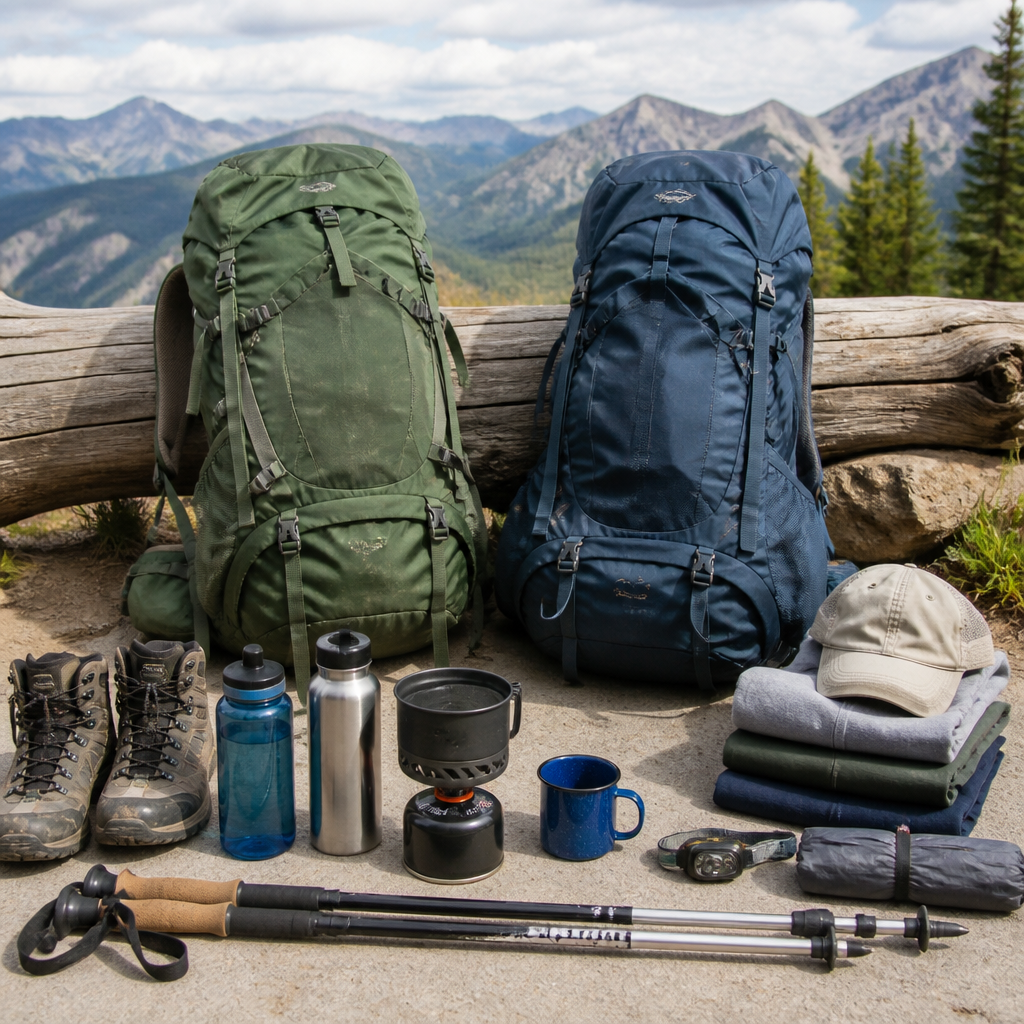
You’re standing in front of the pack wall, and it comes down to this: the two undisputed heavyweights of the backpacking world. The sleek, mesh-backed Osprey Atmos AG and the plush, burly Gregory Baltoro. Choosing between them isn't just about picking a pack; it's about defining your hiking style. Are you a fast-and-light weekend warrior who runs hot, or a heavy-hauling traditionalist who values comfort above all else?
This isn't a simple 'which is better' question. It’s a 'which is better for you' question. For over a decade, these two packs have dominated sales charts and trail registers for a reason. They represent two distinct, masterfully executed philosophies of how a backpack should carry a load. We've spent hundreds of miles with both to help you make the right choice for your 2026 adventures.
The Verdict for Most Hikers
For most hikers on typical 3-5 day trips in three-season conditions, the Osprey Atmos AG 65 is the winner. Its revolutionary Anti-Gravity ventilation system is a game-changer for comfort in hot weather, and its integrated, body-hugging fit makes the pack feel like an extension of you. It’s nimble, efficient, and a joy to carry with loads up to 40 pounds.
However, if your adventures involve heavy loads (50+ lbs), cold-weather gear, or carrying equipment for others, the Gregory Baltoro 65 is still the undisputed king of comfort and support. Its chassis-style suspension is built to manage serious weight without flinching, making it the go-to for guides, aspiring expeditioners, and anyone who refuses to compromise on plushness.
Spec Showdown: Atmos AG 65 vs. Baltoro 65
| Feature | Osprey Atmos AG 65 | Gregory Baltoro 65 | | :--- | :--- | :--- | | Capacity | 65 Liters | 65 Liters | | Avg. Weight (M) | ~4.6 lbs (2.07 kg) | ~4.9 lbs (2.22 kg) | | Max Load Range | 30-40 lbs | 40-55 lbs | | Suspension | Anti-Gravity (AG) Tensioned Mesh | FreeFloat A3 Dynamic Harness | | Included Daypack| No (Lid converts to 'DayLid') | Yes (Nano 14 Daypack) | | Raincover | Included | Included | | MSRP (2026 est.)| ~$340 | ~$350 |
Fit and Suspension: The Hug vs. The Harness
This is the core difference between the two packs. Osprey and Gregory approach fit from opposite ends of the spectrum.
The Osprey Atmos AG uses its Anti-Gravity (AG) suspension, a continuous panel of lightweight, tensioned mesh that extends from the top of the backpanel down and into the hipbelt. When you put it on and tighten it, the pack literally wraps around your back and hips. This 'hug' is incredibly secure, eliminates hot spots, and makes the pack feel like it's part of your body. The downside? Some hikers feel the constant pressure of the wrap-around hipbelt, and it can feel less substantial when the pack is loaded heavily.
The Gregory Baltoro employs the FreeFloat A3 system. This is more of a traditional, separate harness. The shoulder straps and hipbelt pivot independently, allowing the pack to move with your body's natural walking motion. The padding is exceptionally thick and comfortable—it feels like strapping into the seat of a luxury vehicle. The system is designed to transfer the load directly to a robust frame, which then directs the weight onto your hips. It feels less integrated than the Atmos, but its ability to cushion and support is second to none.
Winner: Tie. It’s a matter of preference. Do you want a pack that hugs you (Atmos) or one that carries the load for you (Baltoro)?
Load Carrying: Hauling Heavy vs. Moving Fast
How much weight you carry is the single most important factor in this decision.
The Osprey Atmos AG is a master of loads in the 25-40 pound range. Within this sweet spot, it feels light, agile, and incredibly comfortable. The tensioned backpanel distributes the weight perfectly. But push it past 40-45 pounds, and the mesh suspension begins to show its limits. It can start to feel saggy or bouncy, pulling away from your back and putting more pressure on your shoulders. It's an athletic pack for a dialed-in kit.
The Gregory Baltoro was born to haul. Its internal frame and substantial suspension system come alive when you load it up. Forty pounds feels like nothing. Fifty pounds is manageable and comfortable. This is the pack you want for a week-long trip in the Rockies, a winter snowshoeing overnight, or when you’re carrying the group's tent and stove. The structure simply doesn't deform or complain under weight, giving you incredible stability on tricky terrain.
Winner: Gregory Baltoro, decisively. If your base weight is high or your trips are long, the Baltoro is the superior load-hauler.
Ventilation: The Airflow King
There's no real contest here.
The Osprey Atmos AG's defining feature is its ventilation. The trampoline-style mesh backpanel creates a massive air gap—we're talking inches—between your back and the pack body. Even on a hot, humid climb, a breeze can flow through, drastically reducing the dreaded sweaty-back syndrome. No other pack on the market at this capacity offers this level of cooling.
The Gregory Baltoro has a comfortable backpanel made of multi-density foam with cut-out channels and an airy mesh overlay treated with Polygiene to fight odor. It's one of the best-ventilating traditional backpanels available. But it simply cannot compete with the Atmos's massive air gap. Your back will be in direct contact with the foam, and on a hot day, you will sweat.
Winner: Osprey Atmos, by a landslide. If you hike in the Southeast, the desert Southwest, or just run hot, this feature alone could make the decision for you.
Features & Durability: Pockets and Practicality
Both packs are built to last, but they prioritize different features and materials.
The Osprey Atmos AG feels more modern and streamlined. It uses slightly lighter (but still tough) bluesign®-approved recycled nylon fabrics. Its feature set is smart and user-friendly, including the much-loved Stow-on-the-Go trekking pole attachment, dual-access side water bottle pockets, and massive front stretch-mesh 'shove-it' pocket. The top lid detaches and converts to a minimalist 'DayLid' for summit pushes, which is functional but basic.
The Gregory Baltoro is a feature-rich workhorse. It uses burlier fabrics, especially in high-wear areas. The features are abundant: a full U-zip front panel provides suitcase-style access to the main compartment, which is a huge convenience. The included SideWinder bottle holder is clever. But the killer app is the integrated Nano 14 daypack, a proper ultralight pack that's perfect for day hikes from basecamp. It's a significantly more useful and comfortable system than Osprey's DayLid.
Winner: Gregory Baltoro. The U-zip access and the truly excellent included daypack give it the edge in everyday trail usability and value.
Price and Guarantees: The Investment
As of 2026, both packs retail for a similar premium price, typically within $10-$20 of each other. Neither is a 'budget' pack; they are investments in trail comfort. The real value story here is in their warranties.
Osprey's All Mighty Guarantee is legendary: they will repair any damage or defect for any reason, free of charge, for the life of the product. Gregory offers a similar Lifetime Guarantee, promising to repair or replace due to any defects in materials or workmanship.
Winner: Tie. Both are top-tier products from companies that stand behind their gear. You can't go wrong with either.
Who Should Buy the Osprey Atmos AG?
You should choose the Atmos if:
- You primarily hike in hot or humid conditions and prioritize ventilation above all.
- Your total pack weight is consistently under 40 pounds.
- You value an agile, body-hugging fit that moves with you.
- You appreciate clever, minimalist features like the Stow-on-the-Go system.
Who Should Buy the Gregory Baltoro?
You should choose the Baltoro if:
- You regularly carry heavy loads over 40 pounds for extended trips or winter camping.
- You want the plushest, most cushioned suspension system available.
- You value convenient access (like the U-zip panel) and a full-featured, included daypack.
- You prioritize bombproof durability and load support over saving a few ounces.
FAQ
Q: Do the Osprey Atmos and Gregory Baltoro come with a raincover?
Yes, as of 2026, both the Atmos AG 65 and Baltoro 65 include a custom-fit raincover stored in a dedicated zippered pocket, typically at the top or bottom of the pack.
Q: Can I fit a standard bear canister in these packs?
Yes, both packs can accommodate a standard bear canister (like the BV500). In the Baltoro, it often fits best vertically in the center of the main compartment. In the Atmos, it can be a tighter fit due to the curved frame, and most users find it fits best horizontally on top of their gear, just under the top lid.
Q: Which pack is actually lighter?
The Osprey Atmos AG is consistently lighter than the Gregory Baltoro by about a quarter to a half-pound for a comparable size. This is due to its lighter-weight fabrics and mesh-based suspension system.
Q: What about the women's versions, the Aura and Deva?
The Osprey Aura AG is the direct women's-specific counterpart to the Atmos, and the Gregory Deva is the women's version of the Baltoro. They feature the exact same core suspension technologies, materials, and feature sets, but are built with shoulder straps and hipbelts shaped to fit a woman's torso and hips. All the comparisons in this article apply directly to the Aura vs. the Deva.