
Hoka Speedgoat vs Altra Lone Peak: 2026 Trail Shoe Duel
Torn between the pillowy cushion of the Hoka Speedgoat and the zero-drop freedom of the Altra Lone Peak? We help you choose the best trail shoe for your feet.
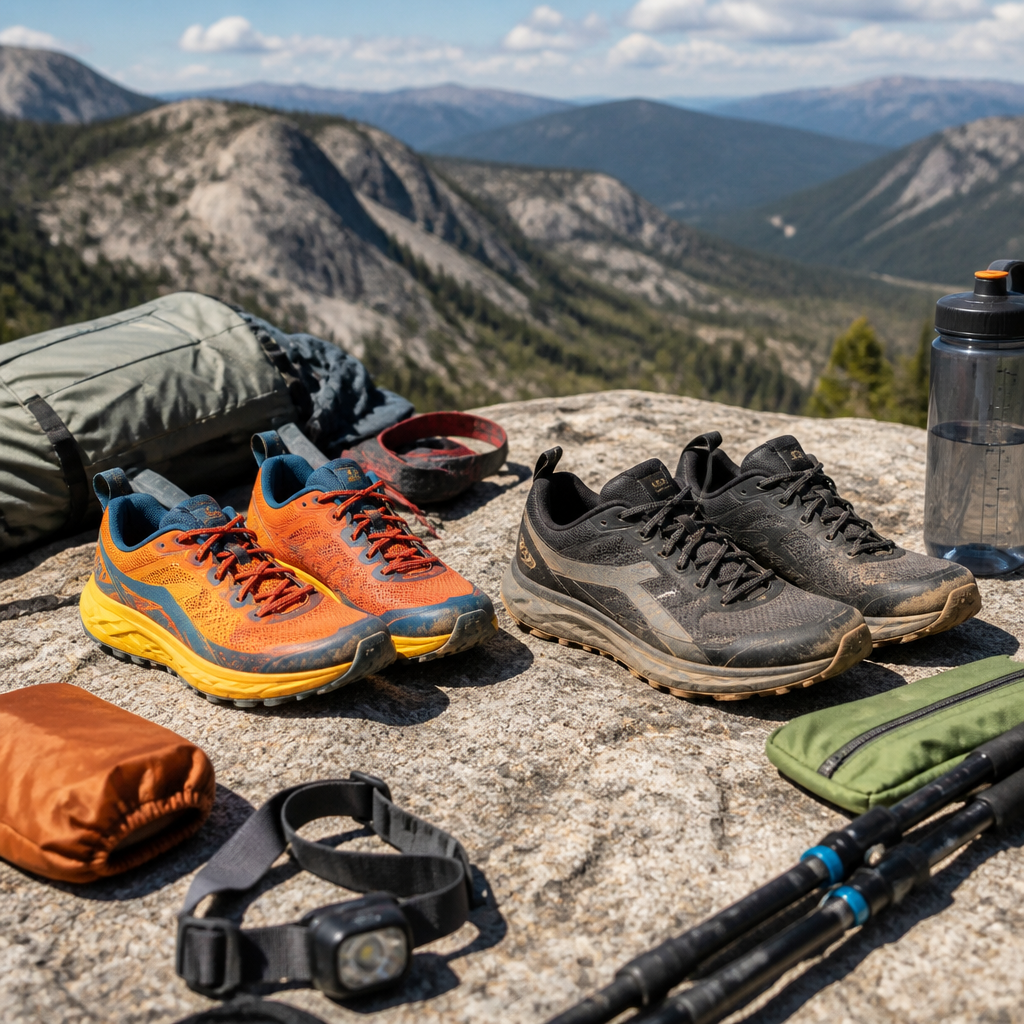
So you’re standing at a crossroads. In one hand, the trail shoe that looks like a technicolor cloud, promising to float you over rocks and roots. In the other, the one with the famously wide, foot-shaped front, whispering about natural movement and connecting with the earth. This is the classic dilemma for the modern hiker: Hoka Speedgoat or Altra Lone Peak?
You’ve seen them on the Pacific Crest Trail, at your local trailhead, and all over your Instagram feed. They represent two distinct philosophies of moving through the mountains. One is about maximum protection from the trail; the other is about maximum engagement with it. Choosing isn't just about picking a shoe—it's about deciding what kind of hiker you want to be.
Fear not. We’ve logged hundreds of miles in both, on everything from dusty desert singletrack to muddy Appalachian scrambles. We're here to cut through the hype and give you the straight-up comparison you need to make the right call for your feet and your next big adventure.
The Verdict for Most Hikers in 2026
For the majority of hikers and backpackers, the Hoka Speedgoat 6 is the better choice. Its plush cushioning provides immediate, undeniable comfort and protection on punishing terrain, and its 5mm drop is an easy transition for anyone coming from traditional boots or running shoes. While the Altra Lone Peak is a phenomenal shoe for the right person, its zero-drop platform requires an adaptation period that not everyone is prepared for. The Speedgoat offers best-in-class comfort and grip right out of the box, making it the more versatile and accessible option for long days on the trail.
Hoka Speedgoat vs. Altra Lone Peak: Spec Showdown
Numbers don't tell the whole story, but they're a great place to start. Here's how the anticipated 2026 models stack up.
| Feature | Hoka Speedgoat 6 | Altra Lone Peak 8 | |---|---|---| | Stack Height | ~38mm heel / 33mm forefoot | ~25mm heel / 25mm forefoot | | Heel-to-Toe Drop | 5mm | 0mm (Zero Drop™) | | Weight (Men's 9) | ~10.3 oz / 292g | ~10.7 oz / 303g | | Cushioning | Maximal | Moderate | | Outsole | Vibram® Megagrip with Traction Lug | MaxTrac™ | | Upper Material | Recycled Woven Textile | Ripstop Mesh | | Fit Profile | Standard/Snug | Wide (FootShape™) | | MSRP | ~$155 | ~$140 |
Fit & Feel: Cockpit vs. Living Room
This is the most significant difference between the two shoes. Trying them on back-to-back is a night-and-day experience.
Hoka Speedgoat
The Speedgoat offers a secure, locked-in feel. Your heel and midfoot are firmly cradled, which inspires confidence on technical, off-camber terrain. It feels like a performance cockpit—everything is exactly where it should be for high-speed maneuvers. The toe box is adequate, but it's a standard shoe shape. If you've never had issues with cramped toes, you'll find it perfectly comfortable. If you have a wider forefoot, you might feel a bit confined.
Altra Lone Peak
The Lone Peak is famous for its FootShape™ toe box. It’s wide, anatomical, and allows your toes to splay out naturally as you walk, which can significantly improve stability and comfort over long miles. The sensation is one of freedom and space—a living room for your feet. The trade-off is a slightly less secure feel in the heel and midfoot for some hikers. While recent versions have improved lockdown, those with very narrow feet might find it a bit sloppy.
Cushioning & Trail Feel: Monster Truck vs. Rally Car
Here we get to the core of each shoe's identity.
Hoka Speedgoat
Maximalism is the Hoka way. The Speedgoat's massive stack of CMEVA foam is like a personal suspension system. It erases trail chatter, absorbs sharp rocks, and makes bombing downhills feel like jogging on a cloud. This is a blessing for anyone with sensitive joints or who regularly tackles 20+ mile days on rocky ground. The downside? You get very little 'trail feel.' You're riding high above the terrain, which can feel slightly disconnected or tippy to some.
Altra Lone Peak
The Lone Peak offers a balanced, moderate level of cushioning. You're protected from the worst impacts, but you still feel connected to the trail beneath you. This is amplified by the 0mm drop, which places your foot in a natural, flat stance. This can promote better posture and a more efficient midfoot strike. Think of it as a rally car—low to the ground, agile, and letting you feel the road. The catch: if you're not accustomed to zero-drop, your calves and Achilles tendons will need time to adapt and strengthen. Jumping into a long hike without this adaptation period is a recipe for injury.
Traction & Grip: The Gold Standard vs. The Contender
Both shoes provide reliable grip, but there's a clear winner on the toughest surfaces.
Hoka Speedgoat
Vibram® Megagrip is the gold standard for a reason. The Speedgoat's outsole, with its aggressive 5mm lugs, clings to virtually everything—wet granite, slick roots, loose scree, and thick mud. In terms of sheer, confidence-inspiring grip in all conditions, it's arguably the best in the business. When the weather turns or the trail gets sketchy, you'll be glad you have it.
Altra Lone Peak
Altra's proprietary MaxTrac™ outsole has improved significantly over the years. For most conditions—dry dirt, rock, and moderate mud—it's perfectly capable. The canted 'TrailClaw' lugs provide solid traction. However, in direct comparison, it doesn't quite match the tenacity of Megagrip, especially on wet, polished rock. It's good, but the Speedgoat's grip is great.
Durability & Construction: Built to Last
A trail shoe is only as good as its ability to withstand abuse. Both brands have made strides here.
Hoka Speedgoat
The Speedgoat's woven upper is tough and resists abrasion well. The critical areas are reinforced, and the shoe generally holds its structure for hundreds of miles. The primary wear point is the exposed midsole foam, which can get nicked and chunked by sharp rocks. This is mostly cosmetic, but it's worth noting. You can reliably expect 300-500 miles out of a pair.
Altra Lone Peak
Early versions of the Lone Peak had a reputation for questionable durability, with uppers tearing prematurely. Altra has taken this feedback to heart. The new ripstop mesh on the Lone Peak 8 is the toughest yet, holding up much better to scrapes and snags. Like the Hoka, expect a lifespan in the 300-500 mile range, depending on terrain and user weight.
Who Should Buy the Hoka Speedgoat 6?
You should choose the Speedgoat if:
- You prioritize maximum cushion and joint protection above all else.
- You frequently hike long distances on rocky, unforgiving terrain.
- You're transitioning from traditional hiking boots and want a familiar heel drop.
- You have average-width feet and value a secure, locked-in fit.
- You want the absolute best-in-class traction for wet and technical conditions.
Who Should Buy the Altra Lone Peak 8?
You should choose the Lone Peak if:
- You value a natural foot position and have adapted (or are willing to adapt) to zero-drop footwear.
- You have a wide forefoot, bunions, or simply hate having your toes squished.
- You prefer more 'trail feel' and a more connected, agile experience.
- Most of your hiking is on moderate trails where ultimate grip is less critical.
- You're a thru-hiker who values the toe splay and reduced swelling over long-term use.
FAQ
Do I need to break in the Hoka Speedgoat or Altra Lone Peak?
Unlike old-school leather boots, modern trail runners like these require minimal break-in. They should feel comfortable out of the box. The 'break-in' for the Altra Lone Peak is for your body, not the shoe. You need to slowly adapt your muscles and tendons to the zero-drop platform over several weeks of shorter walks before tackling a long hike.
Is the Hoka Speedgoat good for wide feet?
The standard Speedgoat runs on the narrower side. However, Hoka offers it in a Wide (2E) version, which is an excellent option for those who need more room but still want that maximal Hoka cushion. It's still not as spacious as an Altra, but it's a huge improvement over the standard fit.
Which shoe is better for thru-hiking the PCT or AT?
Both are exceptionally popular choices. It's a true philosophical split. Many thru-hikers swear by the Lone Peak's wide toe box, which helps accommodate foot swell over thousands of miles. Others find the Speedgoat's superior cushioning is essential for preventing foot fatigue day after day. The best advice is to test both on your training hikes and see which feels better after 15+ miles.
Can I use the Altra Lone Peak if I have plantar fasciitis?
This is tricky. Some people find that strengthening their feet with a zero-drop shoe helps alleviate plantar fasciitis in the long run. However, for others, the lack of heel lift and arch support can exacerbate the problem. It is crucial to consult with a podiatrist or physical therapist and transition very, very slowly if you decide to try it.