
Complete Guide to the Kalalau Trail (2026)
Planning to hike Kauai's legendary Kalalau Trail? Our 2026 guide covers permits, mile-by-mile beta, gear, and pro tips for tackling this epic coast.
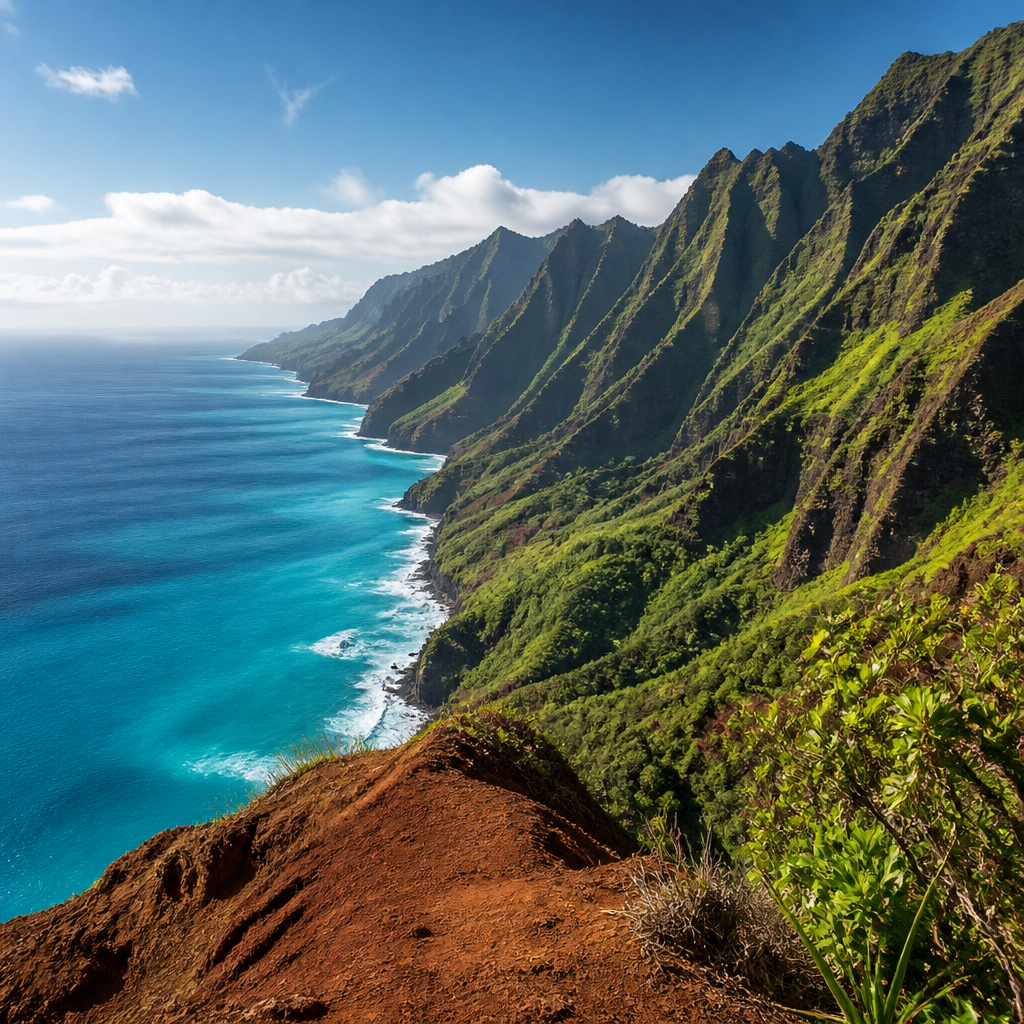
You’ve seen the photos: impossibly green, fluted cliffs plunging into a turquoise Pacific. You’ve heard the legends of a remote beach at the end of a treacherous trail. Now, you’re wondering if you have what it takes to hike the Kalalau Trail on Kauaʻi's Nāpali Coast. The answer is yes—if you plan meticulously, train seriously, and respect the power of this sacred landscape.
This isn't a casual stroll. It's an 11-mile, one-way trek that will test your legs, your nerves, and your gear. But the reward is a night spent in a valley so beautiful it feels like a secret corner of the Earth. This guide is your first step. We'll break down the permits, the sections, the gear, and the mindset you need to do it right.
Kalalau Trail Snapshot
| Statistic | Details | | :--- | :--- | | Total Distance | 22 miles (35.4 km) round-trip | | Total Elevation Gain | ~10,000 feet (3,048 m) round-trip | | Difficulty | Strenuous & Technical | | Time to Complete | 2-5 days (2-night stay is typical) | | Permits Required | Yes, for all access beyond Hanakāpīʻai Beach (mile 2) | | Best Season | April – October (drier summer months) | | Trailhead | Keʻe Beach in Hāʻena State Park |
Getting There: Logistics & Reservations
The Kalalau Trail begins at the far northern end of Kauaʻi's main road in Hāʻena State Park. Access is tightly controlled to protect the area, so you can't just drive up and park.
First, you need to fly into Lihue Airport (LIH). From there, it's about a 90-minute drive to the trailhead.
Your main challenge is park access. You have two primary options:
- Shuttle (Recommended): The Kauaʻi North Shore Shuttle is the easiest way. Book your shuttle ticket online, which includes your park entry fee. This is the preferred method for backpackers, as you can book a multi-day trip without worrying about an overnight parking reservation.
- Parking Reservation: If you have a rental car and prefer to drive, you MUST have a parking reservation for Hāʻena State Park, booked through the same GoHaena.com portal. These are extremely limited, especially for overnight stays, and sell out instantly.
Bottom Line: Book your shuttle or parking reservation the same day you secure your hiking permit. Do not wait.
Trail Description: Section by Section
The Kalalau Trail is an out-and-back journey. We'll break down the 11-mile trek into the valley. Expect the terrain to be a constant rotation of steep, muddy climbs and quad-burning descents.
Miles 0-2: Keʻe Beach to Hanakāpīʻai Beach
This is the busiest part of the trail, as it's open to day hikers (with a park reservation). Don't let the crowds fool you; it’s a proper workout. The trail immediately climbs 800 feet from Keʻe Beach, offering postcard views back down the coast. The path is often slick with mud and polished rock. After the initial ascent, you'll descend steeply to Hanakāpīʻai Beach.
At the two-mile mark, you face your first major obstacle: the Hanakāpīʻai Stream. Do not cross if the water is high or brown from recent rain. Flash floods are a real and serious danger here. This is the turnaround point for day hikers and the permit checkpoint for backpackers.
Miles 2-6: Hanakāpīʻai to Hanakoa Valley
Once you cross the stream, the crowds vanish. The trail becomes narrower and more rugged. You'll traverse along exposed cliffs and dive back into lush jungle. The trail relentlessly climbs and falls. Around mile 3.5, you'll begin the long, hot, exposed climb up to the highest point on the trail at about 800 feet above the ocean.
At mile 6, you'll descend into Hanakoa Valley. It's a dense, often buggy campsite with a shelter, composting toilets, and a reliable stream for water. Many hikers spend a night here to break up the journey, but if you're fit and started early, pressing on to Kalalau is a worthy goal.
Miles 7-8: The Infamous Crawler's Ledge
Shortly after leaving Hanakoa, you'll reach the section that dominates the trail's reputation: Crawler's Ledge. This is a narrow, exposed stretch of trail carved into the face of a sheer cliff, about 300 feet above the crashing surf.
Is it scary? Yes. Is it passable? Absolutely. The "ledge" is plenty wide for your feet, but the exposure is significant. Our advice: don't hesitate. Move deliberately, keep your eyes on the trail ahead (not down), and maintain three points of contact. Use your trekking poles for balance. The rock is solid, and the section is over faster than you think. The mental challenge is far greater than the physical one.
Miles 8-11: Hanakoa to Kalalau Beach
The final push. After Crawler's Ledge, the trail remains narrow and exposed for a bit before one last major climb. Around mile 10, you'll crest Red Hill. This is your reward: the first, jaw-dropping view of Kalalau Valley and its magnificent beach. It’s one of the great vistas in the hiking world.
From here, it's a long, knee-jarring descent to the valley floor. You'll cross a final stream and walk through a grove of trees before stepping onto the sand of Kalalau Beach. Find a campsite, drop your pack, and take a well-earned dip (carefully!) in the ocean.
Water & Camping Strategy
Water Sources: Treat all water on the trail. There is no potable water. Key sources are:
- Hanakāpīʻai Stream (Mile 2)
- Hanakoa Stream (Mile 6)
- Numerous small streams between Mile 6 and 11 (can be seasonal)
- Kalalau Stream (at the end of the valley)
We recommend carrying 2-3 liters of water capacity and filtering at Hanakoa. A filter like the Katadyn BeFree or Sawyer Squeeze is perfect for this environment.
Camping: Your Nāpali Coast State Wilderness Park permit allows you to camp at one of two designated locations:
- Hanakoa Valley: A functional but often wet and buggy stopover point. It's deep in a valley and gets less sun and breeze than Kalalau. Good for breaking up the trip if you have a late start or are managing your energy.
- Kalalau Beach: The prize. Campsites are located in the trees just behind the beach. You must camp in a designated spot. There are composting toilets and a stunning waterfall at the far end of the beach for rinsing off (use biodegradable soap sparingly, if at all, and well away from the water source).
Essential Gear Checklist
Packing light is critical. Every extra pound will be felt on the climbs.
- Backpack: A 35-45 liter pack is ideal. Something like the Osprey Talon 44 or Hyperlite Mountain Gear Southwest 3400 is perfect.
- Shelter: A lightweight backpacking tent or a hammock/tarp system.
- Footwear: Aggressive-tread trail runners are superior to heavy boots here. You want grip and quick-drying performance. Models like the Hoka Speedgoat or Altra Lone Peak are trail favorites.
- Traction: Bring microspikes. It sounds crazy for Hawaiʻi, but on the greasiest, slickest mud sections, they provide incredible security. Don't leave them at home.
- Trekking Poles: Non-negotiable. They are essential for stability on mud, saving your knees on descents, and probing stream depths.
- Rain Gear: A high-quality, lightweight rain jacket. It will rain, even in the "dry" season.
- Water Filter: A reliable squeeze filter or purifier.
- Sun Protection: Wide-brimmed hat, sunglasses, and reef-safe sunscreen. The trail is very exposed in sections.
- Permit: Your printed (or downloaded) hiking and camping permit. Rangers do check.
- Headlamp: For navigating camp after sunset.
Pro Tips for Success
- Nailing the Permit: Permits are available online via the GoHaena.com portal 90 days in advance. They become available at 12:00 AM, Hawaii Standard Time. Be logged in with your info ready to go. They sell out in minutes. Be flexible with your dates.
- Start Early: An early start lets you tackle the climbs in the cooler morning air and gives you a buffer for stream crossings or other delays. Aim to be on the trail by 7:00 AM.
- Pack for Wet: Assume your gear will get damp. Use a pack liner or dry sacks for your sleeping bag and essential clothing.
- Respect the Ocean: The surf at both Hanakāpīʻai and Kalalau can be extremely dangerous, with powerful rip currents. Do not swim if conditions are rough. Be especially cautious in winter months.
- Leave No Trace: This is a sacred and fragile place. Pack out everything you pack in, including food scraps. Use the composting toilets. Stay on the main trail to prevent erosion.
The Kalalau Trail is more than a hike; it's a pilgrimage for outdoor lovers. The planning is part of the adventure. Get your permit, train smart, and you'll earn every last view on one of the world's most spectacular coastal trails.
FAQ
Q: How hard is the Kalalau Trail, really? A: It's a significant physical and mental challenge. If you're an experienced backpacker comfortable with 10+ mile days and 3,000+ feet of gain, you'll find it strenuous but manageable. For less experienced hikers, it can be grueling. The main difficulties are the cumulative elevation gain, slippery mud, and psychological exposure on sections like Crawler's Ledge.
Q: Can you do the Kalalau Trail in one day? A: No, it is not permitted to hike the entire 11 miles to Kalalau and back in a single day. A camping permit is required to go beyond Hanakāpīʻai (mile 2). The 22-mile round trip with ~10,000 feet of elevation change is not feasible or safe for a day trip. You can, however, day-hike the first two miles to Hanakāpīʻai Beach and even continue inland to Hanakāpīʻai Falls (4 miles round trip from the beach) with a park reservation.
Q: What's the best way to get a Kalalau Trail permit? A: Persistence and planning. Be on the GoHaena.com website exactly 90 days before your desired start date, at midnight Hawaii Standard Time. Have multiple date ranges in mind. If you miss out, check back periodically for cancellations, as they do happen.
Q: Are trekking poles necessary for the Kalalau Trail? A: Yes, 100%. We consider them essential safety equipment on this trail. They provide crucial stability on slippery mud and rock, help you probe water depth at stream crossings, and save your knees from thousands of feet of punishing descent.