Complete Guide to the Four Pass Loop: Your 2026 High Alpine Adventure
Dreaming of the iconic Four Pass Loop in Colorado's Maroon Bells-Snowmass Wilderness? Our complete guide for 2026 covers everything you need for a safe and unforgettable backpacking trip, from permits to gear.
Complete Guide to the Four Pass Loop: Your 2026 High Alpine Adventure
For the intrepid hiker seeking unparalleled alpine beauty, glacial-carved valleys, and views that redefine 'epic,' the Four Pass Loop in Colorado's Maroon Bells-Snowmass Wilderness isn't just a hike – it's a pilgrimage. This isn't your average Sunday stroll; it's a challenging, high-altitude journey that rewards every ounce of effort with panoramas that will steal your breath (and maybe a few tears of joy). If you've been captivated by photos of vibrant wildflowers, shimmering alpine lakes, and dramatic peaks, and find yourself wondering how to navigate this iconic trail, you've come to the right place. This 2026 guide will equip you with the knowledge to conquer all four passes and experience the Rockies at their most magnificent.
Trail Snapshot: Four Pass Loop (2026)
| Feature | Detail | | :------------- | :---------------------------------------------------------------------- | | Distance | ~26-28 miles (depending on exact route and detours) | | Elevation Gain | ~7,900 feet | | Highest Point | West Maroon Pass (12,500 ft) | | Difficulty | Strenuous (high altitude, significant elevation changes, exposed passes) | | Permits | Mandatory overnight permits required year-round, booked via Recreation.gov. Day use requires reservations for Maroon Lake Scenic Area. | | Best Season | Late July to mid-September (snow-free, wildflowers, stable weather) | | Typical Duration | 3-4 days (2 nights minimum recommended) | | Starting Point | Maroon Lake Trailhead (near Aspen, CO) | | Wilderness Area | Maroon Bells-Snowmass Wilderness |
Getting There: Accessing Maroon Lake Trailhead
The Four Pass Loop begins and ends at the breathtaking Maroon Lake Scenic Area, just outside Aspen, Colorado. However, access is tightly controlled, especially during peak season (mid-May to late October).
By Public Transportation (Recommended)
During peak season, personal vehicles are restricted from driving to Maroon Lake between 8 AM and 5 PM. The most convenient option is to take the RFTA (Roaring Fork Transit Authority) bus from Aspen Highlands. Reservations for the bus are strongly recommended and often sell out well in advance. Check the Aspen Chamber Resort Association website for the most current information and to book your bus tickets. Consider staying in Aspen or nearby Carbondale/Glenwood Springs the night before to catch an early bus.
By Private Vehicle (Off-Peak or Early/Late Season)
If you are visiting outside of peak hours or season (before 8 AM or after 5 PM, or typically before mid-May and after late October), you may be able to drive directly to Maroon Lake. However, parking is very limited and requires a separate reservation ticket via Recreation.gov. Always confirm current access rules before planning your trip. You do NOT want to arrive at the trailhead only to be turned away.
Trail Description: Navigating the Loop
The Four Pass Loop is typically hiked counter-clockwise, which is generally considered slightly easier on the knees for the ascents and descents. We'll describe the loop in this traditional direction.
Day 1: Maroon Lake to Crater Lake & West Maroon Valley (Approx. 6-8 miles)
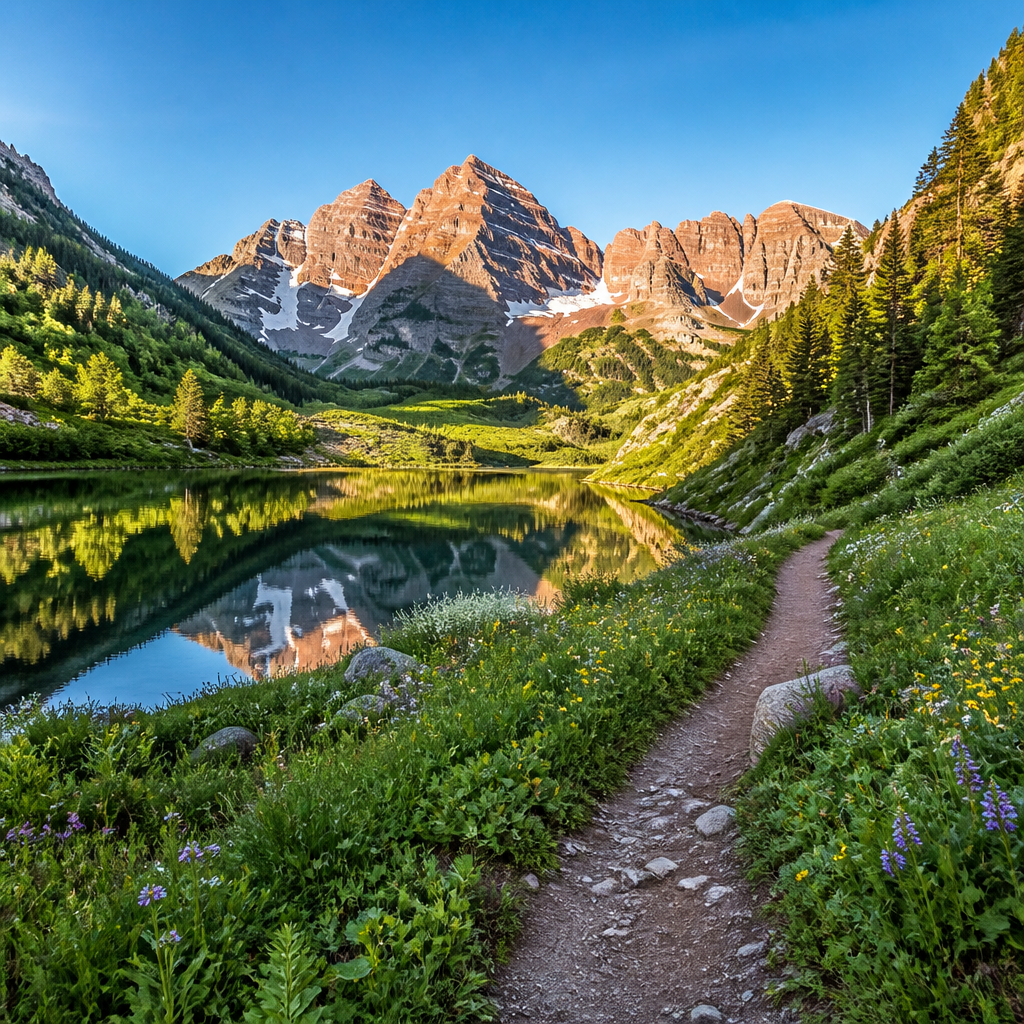
Your adventure begins with the iconic view of the Maroon Bells reflecting in Maroon Lake. Follow the Maroon Snowmass Trail past Crater Lake, a beautiful spot that makes for a great first lunch break. The trail gradually gains elevation, entering the lush, wildflower-filled West Maroon Valley. You'll pass through dense forest before breaking out into open meadows with spectacular views of the surrounding peaks. Look for designated campsites as you approach the base of West Maroon Pass. Plan to camp well below the treeline to avoid exposed areas.
Day 2: West Maroon Pass to Frigid Air Pass & Snowmass Lake (Approx. 8-10 miles)
This is arguably the most challenging and rewarding day. Start early to tackle West Maroon Pass (12,500 ft). The ascent is steep and sustained, often involving snowfields well into July. From the summit, you're greeted with expansive views into the Schofield Pass area. Descend into Fravert Basin, a stunning basin often dotted with more wildflowers. You'll soon begin the ascent to Frigid Air Pass (12,415 ft). The climb is steep, but the views of Snowmass Mountain and the surrounding high peaks are absolutely breathtaking. Descend steeply into the beautiful, open basin leading towards Snowmass Lake. There are abundant camping opportunities around Snowmass Lake – a truly magical place to spend a night.
Day 3: Snowmass Lake to Buckskin Pass & Minnehaha Gulch (Approx. 6-7 miles)
From Snowmass Lake, you'll begin the third major climb of the loop: Buckskin Pass (12,462 ft). This pass offers incredible panoramic views, often cited as the most scenic. You'll see Pyramid Peak, Snowmass Mountain, and a vast expanse of the wilderness. The descent from Buckskin Pass leads you through Minnehaha Gulch, a picturesque valley with a series of cascading waterfalls and lush vegetation. You'll eventually reach the valley floor, with several excellent camping areas along Maroon Creek, often near the junction with the Crater Lake trail or farther down towards the lake itself.
Day 4: Minnehaha Gulch to Maroon Lake (Approx. 4-6 miles)
Enjoy a more relaxed final day as you complete the loop. From your campsite in the Maroon Creek Valley, follow the trail back towards Crater Lake, and then continue on the familiar path back to Maroon Lake. Take your time, soak in the last views of the iconic Bells, and celebrate your accomplishment! Depending on your chosen campsite on Day 3, this day can be as short as 3-4 miles or slightly longer.
Water & Camping: Essential Logistics
Water Sources
Water is generally abundant on the Four Pass Loop from snowmelt and streams, especially in early to mid-season. However, always carry a reliable water filter or purification system (such as the Sawyer Squeeze or Katadyn BeFree). Stream crossings can be numerous, so be prepared for wet feet. Always refill before long climbs, as sources can be scarce at higher elevations and on exposed passes.
Camping Regulations & Permits
Overnight camping in the Maroon Bells-Snowmass Wilderness requires a permit that must be reserved in advance through Recreation.gov. Permits are released in limited batches and sell out extremely quickly for peak season dates. Plan to book as soon as they become available (typically in January or February for the upcoming season). There are designated camping zones, and you must camp within your reserved zone. Dispersed camping is not allowed. Always use Leave No Trace principles: pack out all trash, bury human waste 6-8 inches deep and 200 feet from water/campsites, and use bear-resistant food storage (bear canisters are mandatory and actively checked by rangers).
Gear Checklist: Prepared for the Alpine
Given the high-altitude, variable weather, and strenuous nature of the Four Pass Loop, a well-thought-out gear list is crucial. Here are the essentials:
- Backpack: 50-65L capacity (e.g., Osprey Atmos 65, Gregory Baltoro 65)
- Tent: Lightweight 3-season backpacking tent (e.g., MSR Hubba Hubba, Big Agnes Copper Spur)
- Sleeping Bag: Rated to 15-20°F (even in summer, nights can drop below freezing)
- Sleeping Pad: Insulated for warmth and comfort
- Bear Canister: Absolutely mandatory for food storage
- Water Filter/Purifier: Katadyn BeFree, Sawyer Squeeze, or similar
- Headlamp: With extra batteries
- Navigation: Map (physical and/or Gaia GPS on phone), compass. Do not rely solely on your phone.
- First-Aid Kit: Comprehensive, including blister treatment, pain relief, and any personal medications.
- Sun Protection: Sunscreen, sunglasses, wide-brimmed hat
- Layered Clothing System:
- Base layers (moisture-wicking, synthetic or merino wool)
- Mid-layers (fleece or puffy jacket)
- Outer shell (waterproof/windproof rain jacket and pants)
- Hiking shorts/pants
- Warm hat and gloves (essential even in summer)
- Footwear: Broken-in hiking boots or sturdy trail runners with good ankle support. Wool socks.
- Trekking Poles: Highly recommended for stability on steep ascents/descents and stream crossings.
- Cook System: Lightweight stove, fuel, pot, eating utensil
- Food: High-calorie, non-perishable food for 3-4 days + extra
- Toiletries: Toothbrush, toothpaste, toilet paper, trowel for burying waste
- Permit & ID: Physical copies of all necessary reservations/permits
Pro Tips for a Successful Four Pass Loop
- Acclimatize: If you're coming from sea level, spend a day or two in Aspen or a nearby mountain town (e.g., Leadville) to adjust to the altitude before starting your hike. Headaches, nausea, and fatigue are common signs of altitude sickness.
- Start Early: Especially on pass days, begin hiking at dawn. This allows you to avoid afternoon thunderstorms (common in the Rockies) and gives you ample time to cross passes safely.
- Check Conditions: Always check the weather forecast and recent trail reports (e.g., AllTrails, local ranger stations) before and during your trip. Snow can linger on passes well into August, requiring microspikes or an ice ax depending on conditions and comfort level.
- Practice Leave No Trace: This is a pristine wilderness. Stay on marked trails, pack out absolutely everything (including food scraps), respect wildlife, and minimize your impact.
- Leave a Trip Plan: Inform someone reliable of your itinerary, including your start/end dates, planned route, and when you expect to check in after your trip.
- Physical Preparation: This is a demanding hike. Incorporate significant cardiovascular training, strength training (especially for legs and core), and practice hikes with your full pack weight in the months leading up to your trip.
FAQ: Your Four Pass Loop Questions Answered
Q: When is the best time to hike the Four Pass Loop?
A: Late July to mid-September offers the best window. By late July, most high-elevation snow has melted, and wildflowers are abundant. September brings crisp air and fewer crowds, though overnight temperatures can drop significantly.
Q: Do I need a bear canister for the Four Pass Loop?
A: Yes, bear canisters are mandatory for all overnight campers in the Maroon Bells-Snowmass Wilderness. Rangers actively check for compliance, and fines are steep. Secure your food, trash, and scented items in a certified bear-resistant canister.
Q: How difficult is the Four Pass Loop?
A: It's considered strenuous. The difficulty comes from significant elevation changes (nearly 8,000 feet cumulative gain), high altitude (all four passes are above 12,000 feet), and variable weather conditions. Proper physical conditioning and acclimatization are essential.
Q: Can I hike the Four Pass Loop as a day trip?
A: While technically possible for elite ultrarunners, it is not recommended for hikers due to the extreme distance, elevation gain, and time required. Attempting it in one day without adequate preparation is dangerous and can lead to serious issues. Plan for 3-4 days to truly enjoy the experience and remain safe.
Q: Are there cell phone services on the trail?
A: Cell service is extremely limited to non-existent on most of the Four Pass Loop. Expect to be completely off-grid for the duration of your hike. Carry a satellite communication device (like a Garmin inReach Mini 2) for emergencies.
Ready to embark on one of America's most iconic backpacking adventures? With careful planning, respect for the wilderness, and a spirit of adventure, the Four Pass Loop will deliver memories that last a lifetime. Happy trails!