Build a Beginner Hiking Kit Under $150 (2026)
Ready to hit the trail but intimidated by gear costs? We'll show you how to build a complete, safe beginner hiking kit for under $150 in 2026.
So, you've seen the epic summit photos, heard the call of the wild, and decided you want in. Welcome. But then you clicked on a gear guide and your jaw hit the floor. Four-hundred-dollar jackets? Two-hundred-dollar boots? It can feel like you need a second mortgage just to take a walk in the woods.
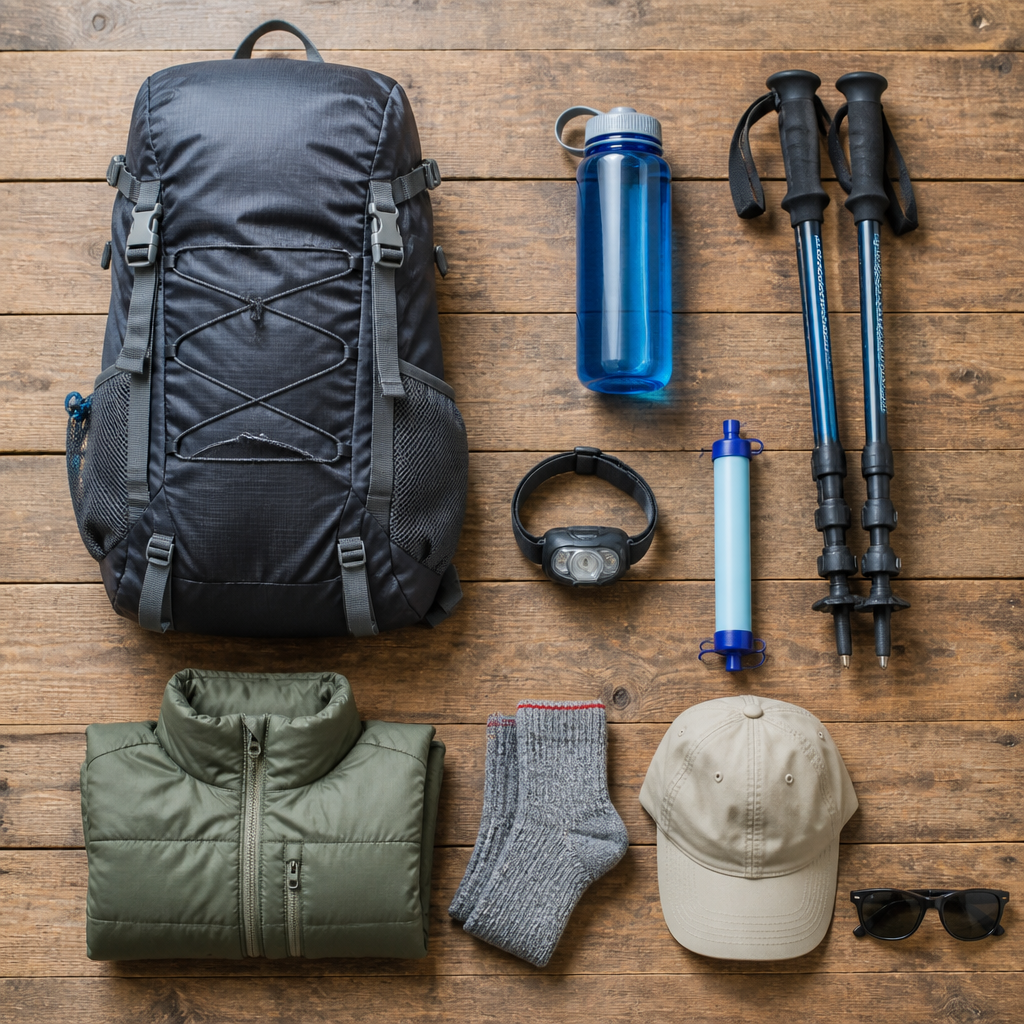
Let's clear the air: you don't. While high-end gear is fantastic, it's absolutely not a prerequisite for having a safe, incredible time on the trail. This guide is for you—the aspiring hiker who wants to start smart, stay safe, and keep your initial investment under $150. We've pieced together a reliable, no-fluff day hiking kit that covers your core needs without emptying your wallet.
Our Picks at a Glance
- Best Budget Daypack: Ozark Trail 20L Vache Daypack
- Best Indestructible Water Bottle: Nalgene Wide Mouth 32oz
- Best Poles for New Knees: TrailBuddy Trekking Poles
- Best Value Headlamp: Petzl Tikkina
- Best Ultralight Water Filter: Sawyer MINI
- Best Starter First-Aid: Adventure Medical Kits Ultralight .3
- Best Analog Navigation Backup: Suunto A-10 Compass
The Complete Beginner Kit Under $150
We hand-picked these items for their killer combination of price, reliability, and function. This isn't about having the lightest or flashiest gear; it's about having gear that works when you need it.
Ozark Trail 20L Vache Daypack
- The Verdict: A surprisingly capable and comfortable pack for the price of a few fancy coffees.
- Why we picked it: You simply cannot beat the value. For under $20, you get a 20-liter pack that's more than enough for a day's worth of water, snacks, layers, and safety gear. It has two side pockets for water bottles and a main compartment that's easy to load. It won't have the bells and whistles of a $150 pack, but it absolutely gets the job done.
- Best for: Hikers on a strict budget who need a simple, functional pack for day hikes up to 8-10 miles.
- Trade-offs: Minimal back ventilation and less-padded shoulder straps mean it's not ideal for very heavy loads or extremely hot climates.
Nalgene Wide Mouth 32oz Bottle
- The Verdict: The virtually indestructible, endlessly useful gold standard of water bottles.
- Why we picked it: It's a classic for a reason. Made from tough, BPA-free plastic, a Nalgene can be dropped, frozen, and abused for years without complaint. The wide mouth makes it easy to fill from streams (with a filter, of course) and to clean. Plus, the measurement markings are handy for tracking hydration or mixing electrolyte drinks. Buy one and you'll likely have it for a decade.
- Best for: Everyone. It's the perfect all-around water container for hiking and daily life.
- Trade-offs: It's a simple bottle, not a hydration reservoir. You'll have to stop and pull it from your pack to drink.
TrailBuddy Trekking Poles
- The Verdict: The best entry-level trekking poles on the market, offering stability and features found in much pricier models.
- Why we picked it: Trekking poles are a secret weapon for hikers, saving your knees on downhills and providing extra power on climbs. The TrailBuddy poles use durable aluminum and reliable lever-locks (which are much easier to adjust than twist-locks). They come with multiple tip options and comfortable cork grips, all for an astonishingly low price. They are consistently a top-seller on Amazon for good reason.
- Best for: New hikers wanting to protect their joints and improve stability on varied terrain.
- Trade-offs: They are slightly heavier than carbon fiber poles, but at this price point, that's a negligible compromise.
Petzl Tikkina Headlamp
- The Verdict: A simple, reliable headlamp from a top-tier brand that's perfect for emergency use.
- Why we picked it: A headlamp is a non-negotiable safety item. If your hike takes longer than expected, getting caught in the dark without a light is a dangerous situation. The Petzl Tikkina is dead-simple to operate (one button!), provides plenty of light (300 lumens) for hiking on a trail, and has an excellent battery life. It's a set-it-and-forget-it piece of gear you'll be glad you have.
- Best for: Every hiker's emergency kit. It's all the headlamp you need for day hiking.
- Trade-offs: It lacks some advanced features like a red light mode (for preserving night vision) or a locking function, but for this purpose, simplicity is a strength.
Sawyer MINI Water Filter
- The Verdict: An ultralight, ultra-packable, and incredibly effective water filter that makes carrying less water possible.
- Why we picked it: The Sawyer MINI allows you to safely drink from backcountry streams, rivers, and lakes. This means you can start your hike with just one liter of water and refill along the way, saving a significant amount of weight. It screws directly onto a standard water bottle, or you can use the included squeeze pouch. It filters out 99.99999% of bacteria and protozoa, and it's rated for up to 100,000 gallons.
- Best for: Weight-conscious beginners and as an essential emergency backup for any hiker.
- Trade-offs: The flow rate is slower than larger filters, and the included squeeze pouch can be prone to breaking over time (though it's easily replaced).
Adventure Medical Kits Ultralight .3
- The Verdict: A tiny, featherlight first-aid kit that covers the most common hiking ailments: blisters, cuts, and scrapes.
- Why we picked it: A first-aid kit is another safety essential. This tiny kit weighs next to nothing but contains the essentials for patching up minor issues on the trail. It includes blister care, assorted bandages, antiseptic wipes, and pain relief medication. It's a great starting point you can (and should) customize with your own specific needs.
- Best for: Solo hikers or small groups on day trips where weight and space are a premium.
- Trade-offs: It's a bare-bones kit. For longer trips or larger groups, you'll want a more comprehensive solution.
Suunto A-10 Compass
- The Verdict: A simple, liquid-filled baseplate compass that will never run out of batteries.
- Why we picked it: While we all use GPS on our phones (and should!), batteries die. A simple compass, paired with a physical map, is the ultimate navigation backup. The Suunto A-10 is a high-quality, no-frills tool that's easy to use for basic orientation and travel. Learning to use one is a fundamental and empowering hiking skill.
- Best for: Any hiker who understands the importance of having a reliable, non-electronic navigation tool.
- Trade-offs: It requires you to know how to use it. Spend 30 minutes on YouTube learning the basics before you go.
Beginner Kit Spec Comparison
| Item | Brand / Model | Est. Price (2026) | Key Feature | | ------------------------- | ----------------------------------- | ----------------- | ---------------------------------------- | | Daypack | Ozark Trail 20L Vache | ~$18 | Unbeatable price-to-function ratio | | Water Bottle | Nalgene Wide Mouth 32oz | ~$15 | Indestructible and easy to clean | | Trekking Poles | TrailBuddy Trekking Poles | ~$25 | Cork grips & lever locks | | Headlamp | Petzl Tikkina | ~$25 | Simple, reliable, long battery life | | Water Filter | Sawyer MINI | ~$20 | Ultralight, filters up to 100,000 gal | | First-Aid Kit | Adventure Medical Kits Ultralight .3 | ~$12 | Featherlight with blister care essentials| | Compass | Suunto A-10 | ~$20 | Battery-free, reliable navigation | | TOTAL | | ~$135 | A complete, safe day hiking kit |
How We Chose This Gear
Our mission was simple: build a day hiking kit that covers the core tenets of the Ten Essentials (Navigation, Light, First Aid, Water, etc.) for less than $150. We prioritized safety and reliability over all else. You won't find the lightest, fanciest gear here. Instead, you'll find tough, field-proven items that offer the absolute best performance for their price. We leaned on gear that we've personally used and seen stand the test of time on the trail, proving that a small budget is no barrier to big adventures.
FAQ
What about hiking boots?
You'll notice boots aren't on our list. That's intentional. Most beginner hikers do not need stiff, heavy, $200 hiking boots. Start with a pair of comfortable, broken-in running shoes or trail runners you already own. Your feet and your wallet will thank you. Once you're hiking regularly, a good pair of trail runners (like the Hoka Speedgoat or Altra Lone Peak) is a fantastic first upgrade.
Do I really need all this for a 2-mile hike?
Yes. A 2-mile hike can turn into a 6-hour ordeal if you take a wrong turn. A twisted ankle can happen 100 yards from the car. This kit isn't about the planned hike; it's about being prepared for the unplanned events. The core items—headlamp, first-aid, extra water (or a filter), and navigation—should be in your pack every single time you hike.
What should I wear?
Avoid cotton at all costs! It absorbs sweat, stays wet, and can chill you dangerously, even in summer. Instead, wear synthetic layers (polyester, nylon) or wool. Think athletic shirts, running shorts or pants, and wool hiking socks. Always pack a rain jacket, even if the forecast is clear. The weather can change in an instant.
If I could upgrade one item, what should it be?
If you have extra room in the budget, invest in your pack. Moving up to a pack like the REI Co-op Flash 22 or an Osprey Daylite will give you a more comfortable carry, better ventilation, and more thoughtful features that you'll appreciate as you start tackling longer, more frequent hikes.