
Beyond the Footprints: A Summer Guide to Loving Our Crowded Trails
Summer brings glorious weather and crowded trailheads. This guide offers a fresh perspective on Leave No Trace ethics, helping us all protect the wild places we love during their busiest season.
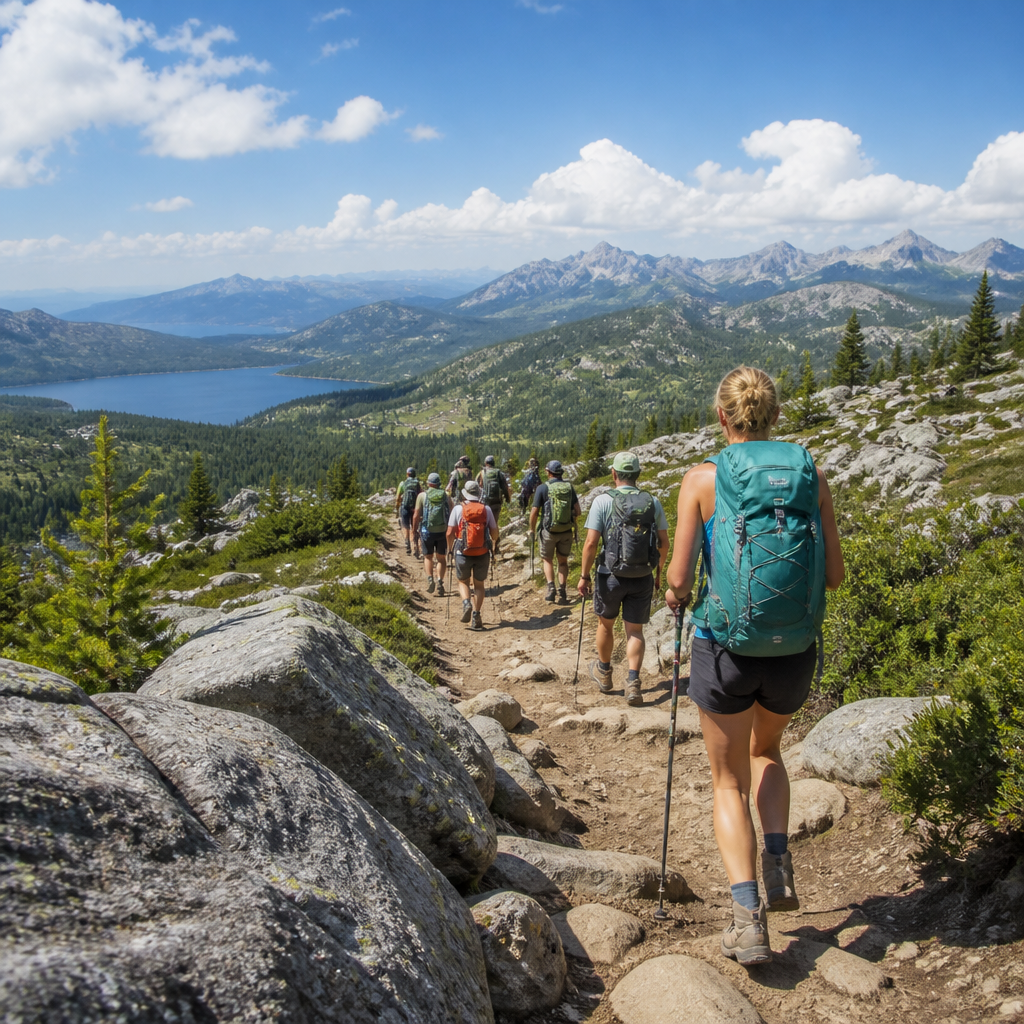
The air is warm, the days are long, and the mountains are calling. Summer is the undisputed high season for outdoor adventure, a time when sun-drenched ridgelines and wildflower-strewn meadows feel like a birthright. With this seasonal pilgrimage comes an inevitable reality: we’re not alone out there. Trailheads are packed, summits are social, and the paths we tread are feeling the pressure of our collective enthusiasm.
For years, we’ve chanted the Leave No Trace (LNT) mantra—pack it in, pack it out. And while that remains a foundational truth, the modern challenges of high-traffic recreation call for a deeper, more nuanced understanding of our impact. It’s no longer just about what we leave behind, but how we move through these spaces and how we share them. This summer, let’s evolve our thinking from simply leaving no trace to actively leaving a place better, or at least no worse for wear, for the next person and the next generation.
The Sound of the Wild
One of the most profound gifts of the backcountry is its soundscape: the whisper of wind through pines, the distant call of a canyon wren, the percussive rhythm of your own boots on dusty earth. This natural quiet is a resource, and it’s a fragile one. The LNT principle “Be Considerate of Other Visitors” extends directly to the noise we create.
Before you hit play on that portable speaker, consider the experience you might be altering for someone just around the bend. They may have hiked for hours seeking the very solitude your playlist is interrupting. Music is deeply personal, which is precisely why headphones are a hiker’s best friend. Let everyone curate their own soundtrack, whether it’s an inspiring album or the simple melody of the wilderness itself. The same goes for loud conversations at viewpoints or shouts across a valley. Let your presence be felt by your gentle footfalls, not your decibels.
The Social Trail Dilemma
We’ve all seen them: those tempting little shortcuts that slice across a switchback, or the widening braids of a trail that look like a faster route through mud. These are often called “social trails,” and they represent one of the greatest threats to trail integrity. The principle “Travel on Durable Surfaces” is about more than just avoiding delicate meadows; it’s about recognizing that a designed trail is a feat of sustainable engineering.
Switchbacks are not there to annoy you; they are designed to manage elevation gain in a way that prevents erosion. When we cut them, we create a channel for water to rush down, washing away precious topsoil and carving a scar into the hillside that can take decades to heal. When a trail widens, it’s because we’re walking on the very edge to avoid a puddle or another hiker. This tramples vegetation, compacts the soil, and makes the trail even more susceptible to damage. The fix is simple, if sometimes inconvenient: walk through the middle of the trail, even if it’s muddy. Your boots will wash, but the trail’s edge may not recover.
Don't Feed the Locals (Even the Cute Ones)
“Respect Wildlife” is a principle we often associate with big animals like bears and moose, and for good reason. But it’s the smaller, seemingly harmless encounters that often cause the most cumulative damage. That curious chipmunk at your lunch spot may be adorable, but tossing it a piece of your trail mix can be a death sentence.
Human food lacks the nutrients wild animals need and can make them sick. More importantly, it habituates them. An animal that learns to associate humans with food will become a nuisance, begging from and even acting aggressively toward future hikers. This behavior often leads to the animal being relocated or, in worst-case scenarios, euthanized. Your act of perceived kindness has a long, often tragic, ripple effect. The best way to respect wildlife is to keep it wild. Secure your food, pack out every last crumb and wrapper, and observe animals from a respectful distance.
The Art of the Trailside Break
Even our moments of rest require mindfulness. When you step off the trail for a water break or to let others pass, apply the “Durable Surfaces” rule. Find a slickrock slab, a patch of dry dirt, or a sturdy log. Avoid crushing delicate ferns, wildflowers, or mossy patches that add so much life to the forest floor.
And let’s talk about that apple core or banana peel. While organic, they are not native to the environment and take a surprisingly long time to decompose, especially in arid or alpine zones. They also attract wildlife, beginning the cycle of habituation we just discussed. “Dispose of Waste Properly” means everything. If you carried it in, you carry it out. No exceptions.
This summer, as we flock to the trails that rejuvenate our spirits, let’s embrace this expanded ethic of care. Let’s be the hiker who picks up a forgotten wrapper, who yields to others with a smile, and who walks single-file through the mud. Our wild places are resilient, but they are not infinite. By moving through them with intention and a quiet grace, we do more than just leave no trace; we become active stewards in their preservation, ensuring the sound of the wild continues to echo for all who follow in our footprints.