Beginner Hiking Kit Under $150 (2026)
Think you need a fortune to start hiking? Think again. We built a complete, reliable beginner hiking kit for under $150 to get you on the trail safely.
You've seen the epic photos. Granite peaks, alpine lakes, friends laughing around a campfire. You want in. But then you look at the gear lists, the price tags, and the jargon, and suddenly the barrier to entry feels as steep as the mountains themselves. Does getting into hiking really require a second mortgage?
Absolutely not. The truth the gear industry won't broadcast is that you don't need a $600 pack and carbon-fiber everything to have a safe, incredible time on the trail. You just need the right stuff. We're here to cut through the noise and show you how to assemble a complete, durable, and reliable day hiking kit for less than the cost of a fancy dinner for two.
This isn't about finding the cheapest junk that will fall apart on your first outing. This is about smart value—the gear that punches far above its weight class and will serve you well as you discover the joy of the trail.
Our Picks at a Glance
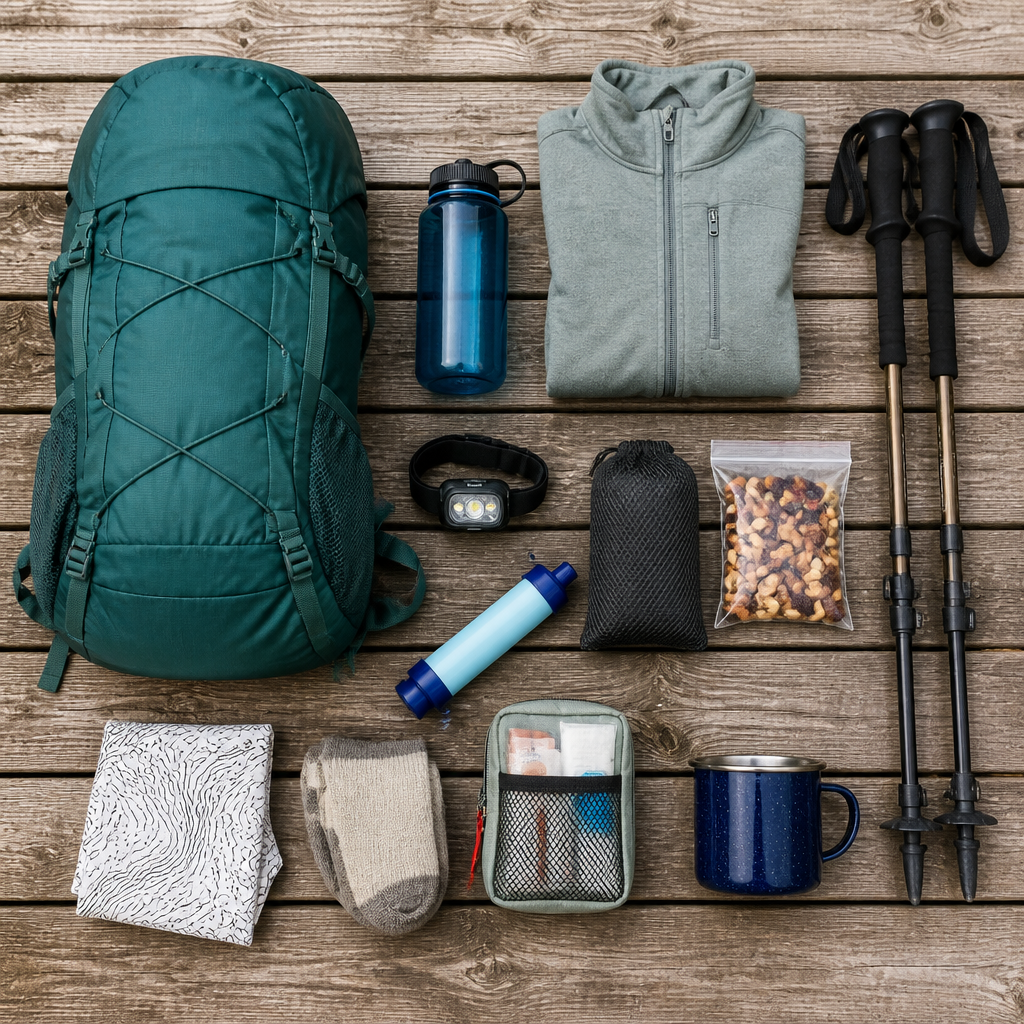
- Best Budget Daypack: TETON Sports Oasis 18L Hydration Pack
- Best Value Water Filter: Sawyer Squeeze
- Best Budget Headlamp: Black Diamond Astro 300
- Best Affordable Trekking Poles: TrailBuddy Trekking Poles
- Best Essential First Aid: Adventure Medical Kits Mountain Hiker
Best Budget Daypack: TETON Sports Oasis 18L
The Verdict: The perfect beginner daypack that includes a hydration bladder, saving you a separate purchase and simplifying your entire system.
Why we picked it: For a beginner, convenience is king. The TETON Sports Oasis 18L comes with a 2-liter hydration bladder, which is a massive value-add. No need to worry about what bottle fits or buying a bladder separately. At 18 liters, it's the ideal size for a day hike, easily holding your layers, snacks, and the rest of the essentials on this list. The cushioned back panel and chest strap provide a level of comfort that's frankly surprising at this price point. It’s a workhorse that removes guesswork.
Best for: New hikers who want an all-in-one solution for carrying gear and water without breaking the bank.
Trade-offs: The materials aren't as bombproof as premium packs from brands like Osprey or Deuter. The included bladder can have a slight plastic taste initially, but a quick rinse with warm water and lemon juice usually solves it.
Best Value Water Filter: Sawyer Squeeze
The Verdict: The undisputed champion of backcountry water filtration, offering incredible performance and longevity for a minimal investment.
Why we picked it: Some budget gear is a compromise. The Sawyer Squeeze is not. This is the same filter used by countless Appalachian Trail and PCT thru-hikers. It's lightweight, incredibly effective (removing 99.99999% of bacteria), and has a virtually unlimited lifespan with proper care. It can screw onto a standard plastic water bottle (like a Smartwater bottle), be used with the included squeeze pouches, or function as an inline filter for a hydration bladder. Its versatility and reliability are unmatched.
Best for: Every single hiker, from the first-timer to the seasoned veteran. This is one of the best investments in outdoor gear, period.
Trade-offs: The flow rate can slow over time, but it’s easily restored by backflushing with the included syringe. The included squeeze pouches have a reputation for developing leaks, which is why many hikers prefer using a more durable disposable water bottle instead.
Best Budget Headlamp: Black Diamond Astro 300
The Verdict: A simple, trusty headlamp from an industry-leading brand that provides all the light a beginner needs for safety and convenience.
Why we picked it: A headlamp is a non-negotiable piece of safety gear. A hike that runs long or an unexpected delay can easily leave you in the dark. The Astro 300 from Black Diamond is brilliantly simple. It has 300 lumens of power—more than enough for navigating a dark trail—and is IPX4 rated, meaning it can handle rain. It's made by a company that stakes its reputation on reliable climbing gear, and that quality is evident even in their entry-level products. Don't leave home without one.
Best for: Early morning starts, sunset hikes, and as an essential emergency item in every pack.
Trade-offs: It runs on three AAA batteries, so it isn't USB-rechargeable like more expensive models. You'll want to carry a spare set of batteries, just in case.
Best Affordable Trekking Poles: TrailBuddy Trekking Poles
The Verdict: The most popular budget trekking poles on the market for a reason—they offer features found on poles triple the price.
Why we picked it: Trekking poles are a game-changer. They save your knees on downhills, provide extra propulsion on uphills, and offer critical stability on uneven ground or stream crossings. The TrailBuddy poles, made of tough aircraft-grade aluminum, come with cork grips (which mold to your hands and wick sweat better than foam) and durable lever-locks, which are far more reliable than the twist-locks common on cheap poles. They come with a full set of tips for different conditions, making them an incredible value.
Best for: Hikers of all ages, especially those with sensitive knees or anyone looking to improve their endurance and stability on the trail.
Trade-offs: At around 10 ounces per pole, they are heavier than premium carbon-fiber models. The lever-lock tension may need occasional adjustment with a thumb screw, but it's a simple, tool-free process.
Best Essential First Aid: Adventure Medical Kits Mountain Hiker
The Verdict: A compact, intelligently organized first-aid kit designed specifically for the most common hiking ailments.
Why we picked it: Building a first-aid kit from scratch can be daunting. The AMK Mountain Hiker kit takes the stress out of it. It’s packed in a lightweight pouch and contains supplies to handle blisters (moleskin!), cuts, scrapes, and sprains. The contents are organized by injury type, so you're not fumbling around in an emergency. It’s peace of mind for about the cost of a sandwich and a coffee.
Best for: Every hiker. Carrying a first-aid kit is a core tenet of responsible outdoor recreation.
Trade-offs: It's designed for 1-2 people for short trips. You should supplement it with your own personal medications, like ibuprofen or an antihistamine.
The Kit at a Glance
Here’s how our beginner hiking kit stacks up. Note that prices are approximate and can fluctuate.
| Item | Brand & Model | Approx. Price | Weight | Key Feature | | :--- | :--- | :--- | :--- | :--- | | Daypack | TETON Sports Oasis 18L | ~$45 | 2 lbs | Includes 2L hydration bladder | | Water Filter | Sawyer Squeeze | ~$30 | 3 oz | Unmatched longevity & reliability | | Headlamp | Black Diamond Astro 300 | ~$20 | 3 oz (w/ batteries)| Simple, durable, weather-resistant | | Trekking Poles| TrailBuddy Trekking Poles | ~$40 | ~20 oz (pair) | Cork grips and lever-locks | | First-Aid Kit| AMK Mountain Hiker | ~$15 | 5.6 oz | Pre-organized for hiking injuries | | TOTAL | | ~$150 | | Ready for the Trail |
How We Chose This Kit
Our philosophy for this kit was simple: value, reliability, and beginner-friendliness.
- Safety First: We focused on the most critical items from the Ten Essentials. A way to carry gear (pack), a way to purify water (filter), a way to see in the dark (headlamp), and a way to handle injuries (first-aid) are non-negotiable for safety. Poles add another layer of stability and injury prevention.
- Performance Over Price: This isn't just a list of the cheapest items on Amazon. Each product is a known performer that offers the best possible function for its cost. The Sawyer Squeeze and TrailBuddy poles, in particular, are beloved by the hiking community for delivering performance that rivals much more expensive gear.
- Ease of Use: We chose gear that works straight out of the box with minimal fuss. An integrated bladder, a simple headlamp interface, and a pre-made first-aid kit all lower the learning curve and let you focus on the hike itself.
A Note on What's NOT Included
You'll notice two big things missing: footwear and clothing. That's intentional. You likely already own things that will work perfectly for your first few hikes. You don't need $200 hiking boots. A pair of comfortable running shoes or trainers will be great on most moderate trails. As for clothes, the golden rule is no cotton. Dig out synthetic athletic shirts, gym shorts or leggings, and a fleece or synthetic puffy jacket you already own. Focus your initial budget on the safety gear listed here, and you can upgrade apparel as you discover your personal needs.
FAQ
Q: If I can only afford three things to start, what should they be? A: Great question. Prioritize safety and comfort: 1) The TETON Sports Pack to carry everything, 2) The Sawyer Squeeze so you never run out of clean water, and 3) The Black Diamond Headlamp as a critical safety backup. That's a solid foundation for about $95.
Q: Are trekking poles really necessary for a beginner? A: They aren't necessary, but they are an absolute game-changer. They reduce impact on your knees by up to 25%, give you more stability, and help you hike longer with less fatigue. If you plan on hiking anywhere with hills, we can't recommend them enough.
Q: What about hiking boots? I thought those were essential. A: Heavy, stiff hiking boots are overkill for most beginners and can cause more blisters than they prevent. Sturdy trail running shoes offer great traction and comfort with no break-in period. Start with comfortable athletic shoes you already own and see how they feel. Only upgrade if you find you need more support or waterproofing.
Q: Is it a good idea to buy used hiking gear? A: Yes, but with caution. Used backpacks and trekking poles can be fantastic deals. Be very wary of buying used safety equipment. Never buy a used climbing rope or harness, and we strongly advise against buying a used water filter, as you have no idea how it was treated or stored.
Getting started in hiking is about taking that first step, not about having the perfect gear. This sub-$150 kit is more than enough to safely and comfortably explore countless miles of local trails. So gear up, tell someone where you're going, and get out there. The mountains are waiting.
<!-- seo-rank-booster:v1 -->Frequently Asked Questions
What is the most essential hiking gear for a beginner?
For your first hikes, the most essential gear includes the "Ten Essentials" adapted for day hiking: navigation, sun protection, extra layers, a headlamp, first-aid, extra food, and extra water. A comfortable daypack is crucial for carrying these items safely and is the foundation of any beginner hiking kit.
Can you really hike safely with budget hiking gear?
Absolutely. The key is to choose "value" over "cheap." Reliable budget hiking gear from reputable brands is tested for safety and durability, ensuring you can have a safe adventure without spending a fortune. This guide focuses on exactly that: dependable gear that won't fail when you need it.
Do I need hiking boots to start hiking?
While dedicated hiking boots offer superior support and traction, they are not mandatory for your first few hikes on well-maintained trails. Many beginners start with comfortable trail runners or sturdy athletic shoes, which are perfectly adequate as you learn the ropes.
What should I pack for my first day hike?
For a typical day hike, your beginner hiking kit should include a daypack, at least 2 liters of water, and a way to filter more, like the Sawyer Squeeze. Also pack high-energy snacks, a rain jacket, a warm layer, a small first-aid kit, and a headlamp for safety.
Is a water filter necessary for day hiking?
While you can carry all the water you need for a short hike, a lightweight water filter is a critical piece of safety gear. It allows you to refill from natural sources if you run out of water or are out longer than expected. A reliable filter is a small, inexpensive investment in your safety.
Related on Bucketlist Field Guide
- Sawyer Squeeze Water Filter — A deep dive into the budget-friendly water filter we recommend for every hiker's kit.
- Darn Tough Hiker Micro Crew Socks — Learn why investing in quality socks is one of the best upgrades a new hiker can make.
- Plain of Six Glaciers Trail — A perfect example of a stunning, moderate day hike where this beginner kit would shine.
- Cascade Canyon — An accessible and iconic day hike that's an ideal goal for a new hiker breaking in their gear.