
The Last Verse: Finding Silence in Iceland's Westfjords
In the remote, fjord-carved peninsula of Iceland's Westfjords, time slows to the rhythm of the tides and the cry of the Arctic tern. It’s a land at the edge of the world, where silence speaks volumes and the raw power of nature rewrites your soul.
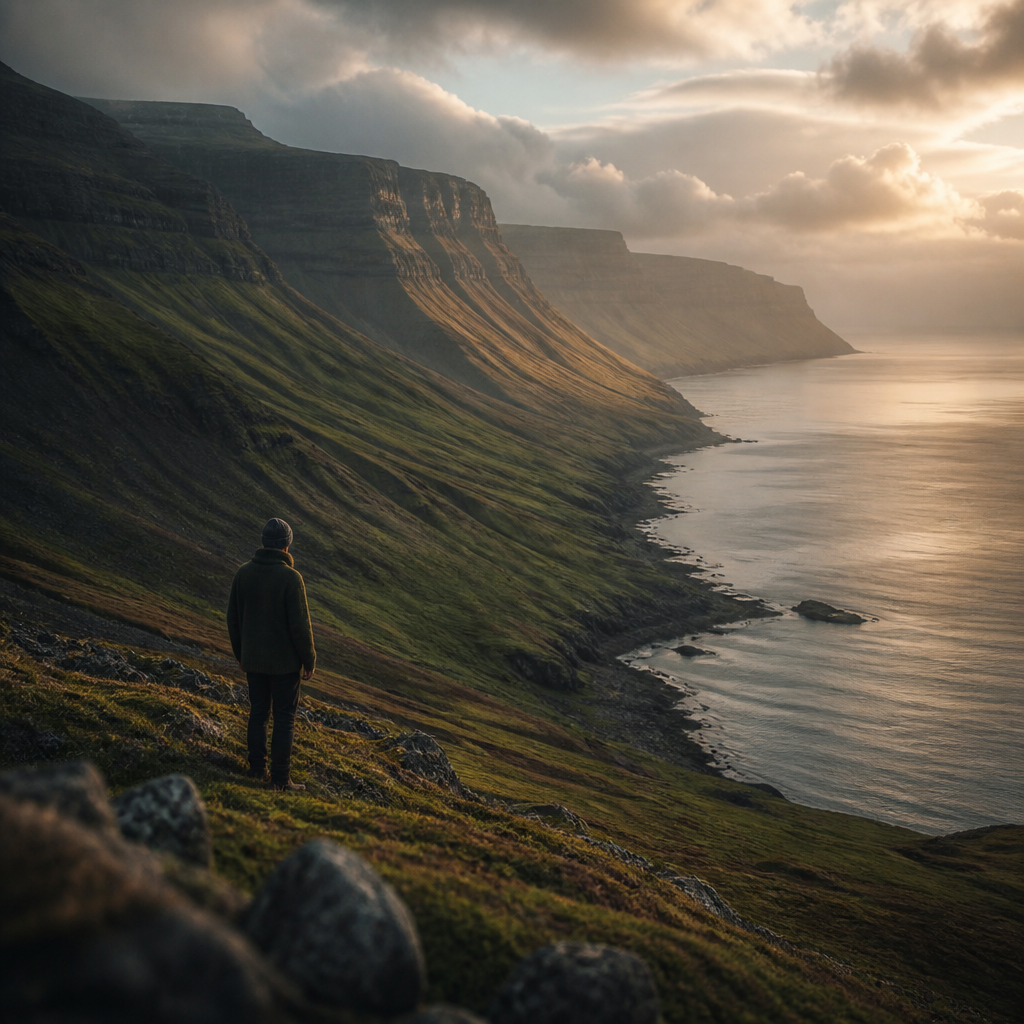
To understand the Westfjords, you must first look at a map. There, in the far northwest corner of Iceland, is a shape that seems to reject the very idea of land. It is a frantic scribble, a monster’s hand with gnarled fingers clawing at the Greenland Sea. This is not a place you pass through; it is a place you must intentionally seek. The journey begins where Iceland’s famed Ring Road ends, peeling off onto a lesser-traveled path that promises not convenience, but commitment.
The air changes. The crowds of tour buses vanish, replaced by the occasional sheep-induced traffic jam. The landscape, once characterized by the wide, volcanic plains of the south, tightens into something more ancient and severe. This is the prelude to the Westfjords, a region that holds just a fraction of Iceland’s population but a vast majority of its coastline, a land defined by its serrated edges and profound, anechoic silence.
The Fjord-Serrated Edge
The driving itself is the first immersion. The roads here are a narrative, winding precariously along the edges of colossal basalt mountains that plunge vertically into ink-blue water. Each turn is a revelation: a hidden cove, a waterfall cascading directly onto the road, a colony of seals basking on a skerry. You don’t traverse the Westfjords; you trace them. The journey from the peninsula’s base to its main hub, Ísafjörður, could be a short flight, but to drive it is to understand the geography in your bones. It is a daylong dance with the sea, rounding fjord after fjord—each a self-contained universe with its own weather, its own mood.
Down in the fjord bottoms, tiny fishing villages huddle against the overwhelming scale of nature. Places like Bíldudalur or Þingeyri, with their candy-colored houses and harbors full of stoic fishing vessels, feel like the last outposts of humanity. They are testaments to a stubborn resilience, communities that have weathered centuries of brutal winters, devastating avalanches, and the constant, grinding presence of the North Atlantic. You feel less like a tourist and more like a temporary witness to a life lived in dialogue with the elements.
Where the Wild Things Are
If the land is severe, the life it supports is vibrant and defiant. The Westfjords are one of Europe’s last great wildlife sanctuaries. The pinnacle of this experience is Látrabjarg, a 14-kilometer-long cliff that marks the westernmost point of the continent. To stand at its edge in summer is to be confronted by a wall of life. Millions of seabirds—puffins, guillemots, razorbills, kittiwakes—nest in a chaotic, deafening, and breathtaking spectacle.
The puffins, with their sorrowful eyes and clownish grace, are impossibly close. They have little fear of humans, allowing you to lie on the turf and observe them from mere feet away as they return from the sea with beaks full of glistening sand eels. It is an encounter so intimate it feels like a privilege, a moment of communion with a creature utterly wild.
But for every cacophonous cliff, there is a silent valley. The Hornstrandir Nature Reserve, an uninhabited peninsula at the northern tip, is the dominion of Iceland’s only native land mammal: the Arctic fox. Here, protected from hunters for decades, the foxes exhibit a rare curiosity. To see one—a flash of white against snow or a shadow of charcoal gray slinking through fields of angelica—is an exercise in patience and stillness. It is in these quiet moments of observation, waiting for a fox to emerge from its den or watching a humpback whale breach in the still waters of Ísafjarðardjúp, that the Westfjords’ true magic takes hold.
Echoes of the Old Ways
The human story here is one of perseverance. Ísafjörður, the region’s largest town, is a sophisticated hub nestled under a looming, flat-topped mountain. Its old town boasts beautifully preserved timber houses from its 18th-century heyday as a fishing port. Yet, its soul is still that of a frontier town. It’s a place where you can find an excellent artisan bakery and a world-class restaurant serving locally-caught cod, but also a museum dedicated to the arcane history of Icelandic sorcery and witchcraft.
This blend of old and new is everywhere. Scattered across the coastline are the life-affirming geothermal pools known as ‘hot pots.’ Some are structured community pools, but the best are little more than stone-lined tubs in the middle of nowhere. To sit in the geothermally-heated water of Krossneslaug, a remote pool built directly on a black pebble beach, while the cold waves of the Atlantic crash just yards away, is to understand the Icelander’s relationship with nature—a partnership of respect and resourceful adaptation. It is warmth found in the heart of cold, comfort at the edge of the world.
The Call of Hornstrandir
For the truly committed, the final pilgrimage is Hornstrandir. Abandoned by its last permanent residents in the 1950s, this entire peninsula is now an inviolable nature reserve, accessible only by a few hours’ boat ride from Ísafjörður. There are no roads, no shops, no infrastructure. There is only you, a trail, and a landscape that feels Paleozoic in its purity.
A multiday trek through Hornstrandir is a profound lesson in self-reliance and the raw beauty of an ecosystem left to its own devices. You hike through lush, green valleys carpeted with wildflowers, ford ice-cold rivers, and ascend to stark, fog-shrouded plateaus where the silence is broken only by the wind and the piercing cry of an Arctic tern. You might walk for days, seeing only the ruins of an old farmhouse, its turf roof slowly collapsing back into the earth, a poignant reminder of the lives once lived here. You filter water from streams, pitch a tent on a carpet of moss, and watch the midnight sun paint the sky in hues of orange and pink over a silent, empty bay. This is not about conquering peaks; it is about surrendering to the scale and rhythm of true wilderness.
To leave the Westfjords is to feel a palpable shift. Back on the Ring Road, the world feels loud, hurried, and crowded. You carry the silence with you. This is a place that doesn’t just offer vistas; it offers perspective. It is the final, haunting verse of Iceland’s song—a verse of solitude, resilience, and the humbling beauty of a world untamed.
<!-- seo-rank-booster:v1 -->Frequently Asked Questions
Is it worth visiting the Westfjords in Iceland?
Absolutely. If you seek solitude, dramatic landscapes, and incredible wildlife, the Westfjords are one of Iceland's most rewarding regions. It offers a quieter, more remote experience away from the main tourist crowds, defined by its deep fjords, towering bird cliffs, and a profound sense of wildness.
What is the best time of year to visit the Westfjords?
Summer, from June to August, is the ideal time to visit Westfjords Iceland. During these months, the roads are generally clear of snow, services are open, and the wildlife is most active. This is the only time you can see millions of puffins nesting at the Látrabjarg cliffs.
How many days do you need for the Westfjords?
Plan for a minimum of 3 to 5 days to properly experience the Westfjords. The driving is slow due to winding coastal roads, and you'll want ample time to explore the fjords, visit towns like Ísafjörður, and spend time at key sites like Látrabjarg without rushing. A full week would allow for a more relaxed and in-depth journey.
What are the main attractions in the Westfjords?
The top attractions in the Westfjords include the Látrabjarg cliffs, the westernmost point of Europe and a massive seabird colony; the remote Hornstrandir Nature Reserve, home to the arctic fox; the stunning Dynjandi waterfall; and the region's charming capital, Ísafjörður. The drive itself is a primary attraction, offering breathtaking scenery around every turn.
Related on Bucketlist Field Guide
- Hoh River Trail to Blue Glacier — For another journey into a remote, wild landscape culminating at the foot of ancient ice.
- Arc'teryx Beta AR Jacket — The Westfjords' weather is notoriously unpredictable; a durable, all-round hardshell is essential.
- ZOLEO Satellite Communicator — Essential safety gear for staying connected when traveling through a region as remote and sparsely populated as the Westfjords.
- Danner Mountain 600 Leaf GTX — A versatile, waterproof hiking boot perfect for exploring Iceland's rugged coastlines and turf-covered cliffs.