The Ultimate Backpacking Checklist for Beginners (2026)
A trip-ready backpacking checklist for beginners: the 10 Essentials plus overnight gear, cooking, water, clothing, and safety — with links to our gear reviews.
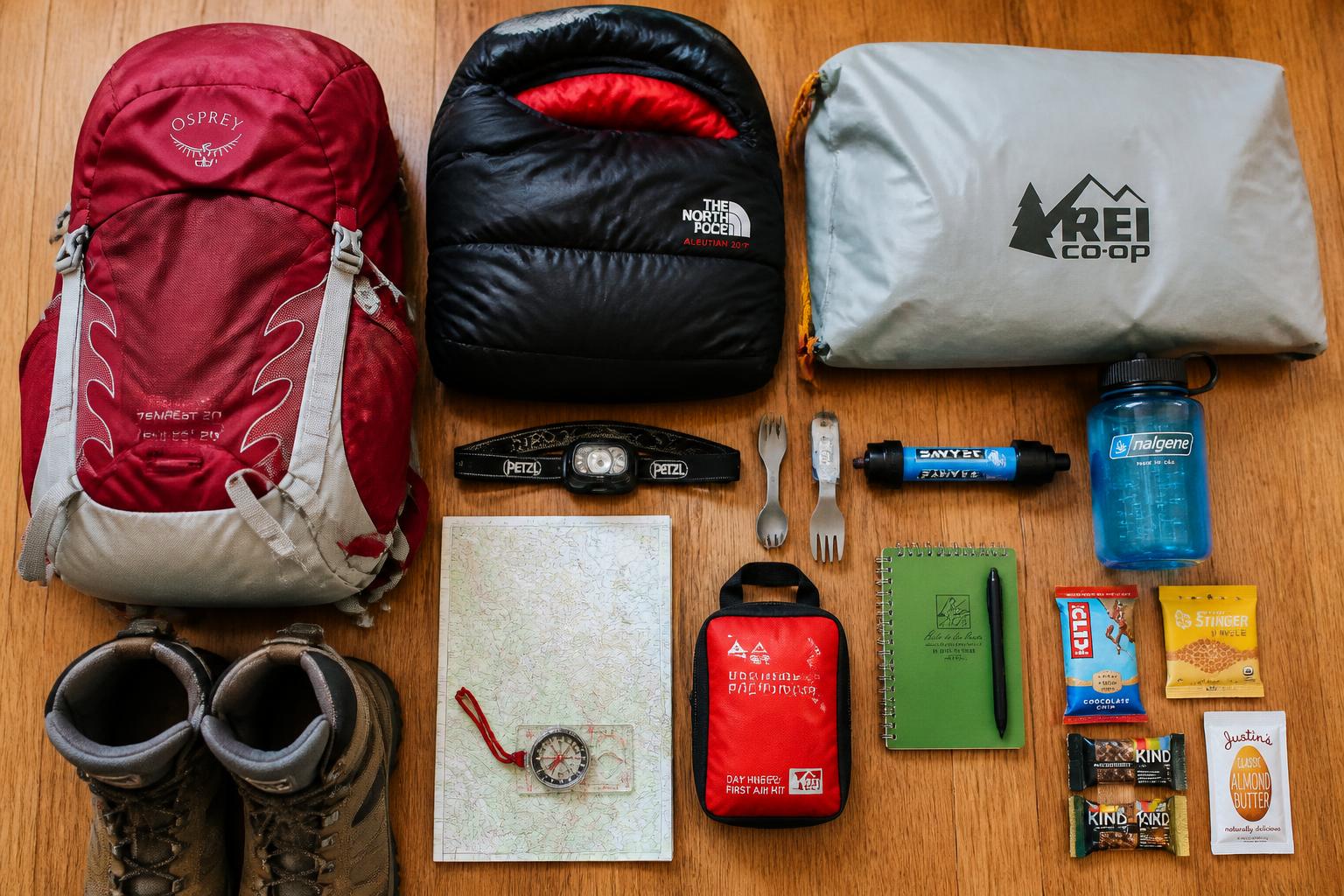
A great first backpacking trip starts at the kitchen table, not the trailhead. Pack the right gear and the miles take care of themselves; forget a headlamp or a rain shell and a beautiful overnight turns into a long, cold lesson. This is the trip-ready backpacking checklist for beginners we hand to friends before their first night in the backcountry — the 10 Essentials plus the overnight gear that keeps you warm, fed, and on the trail.
Use it as a packing list, a shakedown checklist the night before, and a shopping list when you're still building your kit. Every category links to our detailed reviews so you can pick gear that actually fits your trip and budget.
New to backpacking? Pair this list with our Ultralight Backpacking Gear Guide for premium-vs-budget picks across every category, and our Pre-Season Shakedown for how to test your kit before the trip.
The 10 Essentials (non-negotiable)
These ten categories come from the Mountaineers' classic system and belong on every overnight trip, no matter how short.
- Navigation — paper map of the area, baseplate compass, and a GPS app like Gaia or CalTopo downloaded offline on your phone.
- Headlamp — plus spare batteries. A phone flashlight is not a headlamp.
- Sun protection — sunscreen, SPF lip balm, UPF sun hoody or wide-brim hat, polarized sunglasses.
- First aid — a small pre-built kit (blisters, ibuprofen, antihistamines, tape, gauze, tweezers).
- Knife & repair kit — a small folding knife, a few feet of duct tape wrapped around a trekking pole, and a tent pole splint.
- Fire — stormproof lighter plus a backup (mini Bic in a ziplock or ferro rod).
- Shelter — your tent counts, but also carry an emergency bivy or space blanket for unplanned nights out.
- Extra food — one full day beyond your planned meals.
- Extra water — capacity for at least 2L, plus a filter or chemical treatment.
- Extra clothes — a warm insulated layer and rain protection even if the forecast is clear.
The Big Three: pack, shelter, sleep system
These are the heaviest and most expensive items in your kit. Get them right and everything else gets easier.
Backpack (50–65L for weekend trips)
A well-fitted 50–65L pack carries 2–4 nights comfortably for most beginners. Get it sized at REI if you can — torso length matters more than brand. See our breakdown in the Ultralight Backpacking Gear Guide for specific pack recommendations across budgets, and our boot guide for footwear that pairs well with a loaded pack.
Shelter (tent, footprint, stakes)
A freestanding 2-person tent with a full rainfly is the most forgiving choice for a first overnight. Pitch it in the backyard before the trip — this is the #1 shakedown step beginners skip.
Sleep system (bag + pad)
- Sleeping bag rated 10–15°F colder than the expected low.
- Sleeping pad with an R-value of at least 3.0 for three-season use. Pad insulation matters more than most beginners realize — a 0°F bag on a summer pad will still be cold.
Cooking and water
- Canister stove (Pocket Rocket-style) + 100g fuel canister
- Lighter + backup
- 750ml titanium or aluminum pot
- Long-handled spoon
- 2L water capacity (bottles or bladder)
- Squeeze filter (Sawyer Squeeze or similar) — see our water treatment notes
- Dehydrated meals or simple ramen + tuna packets
- Bear canister or Ursack where required, plus a 50ft cord for hanging in other terrain
Clothing for one overnight
Pack to layer, not for outfits. You wear one set and pack one warm/dry set — that's it.
- Synthetic or merino t-shirt (worn)
- Long-sleeve sun hoody (worn)
- Hiking pants or shorts (worn)
- Insulated puffy jacket (synthetic for wet climates, down for dry)
- Rain jacket with pit zips
- Rain pants if rain is forecast or you're above treeline
- Beanie + light gloves (even in summer)
- 2 pairs merino hiking socks (one for hiking, one dry for sleep)
- Camp shoes (lightweight sandals or Crocs)
For boot fit and break-in tips, read our best hiking boots guide.
Trail safety and navigation
- Permits and trip plan left with someone at home
- Whistle (usually built into pack sternum strap)
- Pen + waterproof notepad
- Phone in waterproof bag with offline maps downloaded
- Personal locator beacon (Garmin inReach Mini or similar) for solo or remote trips
Hygiene and Leave No Trace
- Trowel for catholes (6–8" deep, 200ft from water)
- Toilet paper + ziplock for pack-out
- Hand sanitizer
- Toothbrush + small toothpaste
- Quick-dry pack towel
- Trash bag for your waste (and any you find)
The night-before shakedown
The night before your trip, lay every item from this checklist on the floor and pack it fresh — don't trust what's already in your pack from last season. Then weigh the pack with water and food: most beginners are surprised how much 4L of water and 2 days of food adds. Our Pre-Season Shakedown walks through the full process.
What you can skip on a first overnight
- Camp chair, pillow, extra books
- Multiple changes of clothes
- Full-size hatchet or saw
- Heavy cast iron or large cook kits
- Anything cotton (shirts, socks, jeans — cotton kills when wet)
Related guides
- Ultralight Backpacking Gear Guide — premium vs. budget picks across every category
- Best Hiking Boots 2026 — footwear that won't wreck your first trip
- Pre-Season Shakedown — how to test your kit before you go
- Navigating Without Signal — offline maps, compass basics, and bailout planning
- Browse all hiking & camping gear reviews
Print this list, tape it to your gear closet, and check items off as you pack. After three or four trips you'll know exactly what you reach for and what stays in the closet — that's when you start trimming weight. Until then, packing this complete list means a warm, dry, fed weekend in the woods. That's the whole point.
<!-- seo-rank-booster:v1 -->Frequently Asked Questions
What are the most important items for a beginner backpacking trip?
The most critical items for any beginner are the "Big Three": your backpack, your shelter (tent), and your sleep system (sleeping bag and pad). After that, focus on the 10 Essentials, which cover navigation, sun protection, insulation, hydration, and other safety basics that should be in every pack, regardless of trip length.
What size backpack do I need for a 2-3 day trip?
For a 2-3 day trip, most beginners should look for a backpack in the 50-65 liter range. This provides ample space for your shelter, sleep system, food, and clothing without forcing you to make ultralight compromises. Ensure you get fitted for your torso length, as a proper fit is more important than the specific volume.
How much should a beginner's backpack weigh?
A beginner's fully loaded backpack for a weekend trip should ideally weigh no more than 20% of their body weight, with a typical target being around 25-30 pounds. Focus on your "base weight" (the weight of your pack minus consumables like food and water), aiming for under 20 pounds to make the hiking more enjoyable.
What food do you pack for a beginner backpacking trip?
For a first trip, keep food simple. Pack high-calorie, low-weight options like dehydrated backpacking meals, instant ramen or couscous, and protein-rich additions like tuna packets or jerky. Always bring snacks like trail mix and protein bars, and pack at least one extra day's worth of food for emergencies.
What's the difference between a backpacking and a camping checklist?
A backpacking checklist prioritizes weight and packability above all else, as you must carry everything on your back. A car camping checklist allows for heavier, more comfortable items like large tents, coolers, and multi-burner stoves, since weight is not a primary concern when your vehicle is nearby.
Related on Bucketlist Field Guide
- Hoh River Trail to Blue Glacier — An iconic multi-day trip with a gentle grade, perfect for testing your beginner backpacking kit.
- Zpacks Arc Haul Ultra 60L — Our review of a premium ultralight pack in the 60L range suitable for weekend trips and beyond.
- Therm-a-Rest NeoAir XLite NXT — A breakdown of the gold-standard ultralight sleeping pad, a key part of your sleep system.
- Durston X-Mid Pro 2 — A look at a popular and lightweight 2-person tent ideal for beginner and experienced backpackers.
- Jetboil Stash Cooking System — A review of a lightweight, all-in-one cooking system that's a great choice for first-time backpackers.